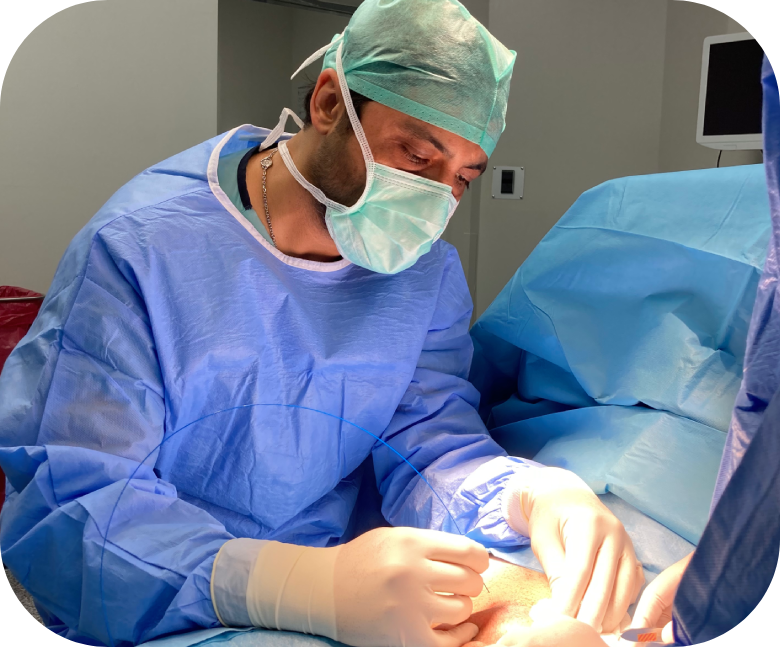
What is a Vasectomy?
Vasectomy is a reliable surgical method that provides permanent contraception for men. During the procedure, the tubes that carry sperm into the semen are cut or sealed, allowing ejaculation to continue while preventing sperm from being present in the semen. Vasectomy does not negatively affect sexual desire, erectile function, or orgasm. For more information about vasectomy and to find out whether it is the right option for you, please contact our clinic.
Prof. Dr. Şükrü Kumsar has many years of experience in vasectomy surgery. Throughout his career, he has successfully performed hundreds of vasectomy procedures, providing safe, effective, and permanent male contraception through individualized surgical care based on current evidence-based clinical practice.

Vasectomy offers many advantages as a method of birth control, the most important of which is its effectiveness. Like tubal ligation in women, vasectomy is a one-time procedure that provides permanent birth control. However, compared to the female procedure, vasectomy is simpler, more effective, can be performed on an outpatient basis, has fewer complications, and is much cheaper.
Types of Vasectomy
Several different vasectomy techniques are described in the medical literature:
-
- Classic Vasectomy:
A small incision is made in the scrotum along the midline to access both vas deferens, which are then tied off or cut and sealed. - No-Scalpel Vasectomy:
Special instruments are inserted through a smaller incision to ligate the duct. This results in less bleeding and faster recovery. - Cauterisation Method:
The ends of the ducts are cauterised to seal them, and sometimes an additional ligation procedure is performed.
- Classic Vasectomy:
How is the procedure performed?
Vasectomy is performed in an outpatient clinic under local anaesthesia. The surgeon locates the two tubes that carry sperm, known as the vas deferens, under the skin of the scrotum and holds them in place (one at a time).
A local anaesthetic is injected using a small needle or other syringe, completely numbing the surgical area. The anaesthetic takes effect immediately.
The surgeon makes a small opening in the skin to grasp, cut, and seal the vas deferens. Although some men may feel a slight "pulling" sensation, discomfort is minimal. This approach causes very little bleeding. Stitches may or may not be required to close the incision. The procedure usually takes 15 to 20 minutes.

Who is it suitable for?
Vasectomy is suitable for men who do not wish to have children or who consider their current number of children sufficient. Specifically:
- Couples seeking a permanent method of birth control,
- Those whose partners cannot tolerate methods such as birth control pills or IUDs,
- Middle-aged men who do not wish to have more children,
- Couples wishing to avoid more complex and risky procedures such as tubal ligation in women.
It is important to note that vasectomy should be planned as a permanent method. Although reversal surgery (vasovasostomy) is possible, success rates are very low.
Procedure Process: Before and After
Before the Procedure
A doctor's examination is always performed before a vasectomy or similar procedure, and the patient is given detailed information. During this information session, the purpose of the procedure, how it is performed, possible risks, and points to consider afterwards are explained in detail. An informed consent form is obtained from the patient, and their consent to the procedure is officially documented. If the patient is taking blood-thinning medication (such as aspirin or similar anticoagulants), they may need to stop taking it a few days before the procedure. This is to minimise the risk of bleeding during the procedure.
During the Procedure
The patient is fully awake during the vasectomy. Thanks to the local anaesthesia administered to the area, pain is minimal. The procedure usually takes 15–20 minutes to complete. As it is a very minor surgical procedure, general anaesthesia or a long hospital stay is not required. The patient is monitored comfortably during the procedure and does not experience any significant discomfort due to the effects of the anaesthesia.
Post-Procedure
After the procedure, temporary side effects such as mild pain, bruising, or swelling may occur. These symptoms usually disappear on their own within a few days. Most patients can return to their normal daily lives within 1–2 days. However, it is recommended to wait at least 1 week before resuming sexual intercourse. This is to allow the tissues to heal completely and to prevent possible complications. Furthermore, as any sperm remaining in the ducts prior to the procedure will continue to be expelled for some time, additional contraceptive methods must be used for approximately 20–30 ejaculations or for a period of 3 months. At the end of this period, a semen analysis must be performed to ensure that there are no live sperm cells in the semen. Unprotected intercourse should not be initiated without this confirmation.
Post-Procedure Considerations
It is important to rest as much as possible during the first 24–48 hours. Activities such as strenuous exercise, running, or weightlifting should be avoided, especially in the first few days. This allows both the suture line and the surgical area to heal comfortably. Keeping the area clean and dry minimises the risk of infection. Mild pain can usually be controlled with simple painkillers.
Vasectomy Surgery Cost
Vasectomy surgery costs in Turkey vary depending on the city where the hospital is located, the technique used, the doctor's experience, and health insurance coverage. The pricing policy of the centre you plan to visit should be inquired about for an exact cost.
RANDEVU OLUŞTUR
Ertelemeyin, Hemen Görüşelim