Testicular Diseases
Testicular disorders include a wide range of conditions such as testicular pain, testicular cysts, hydrocele, varicocele, undescended testis, testicular torsion, and testicular cancer. These conditions may present with symptoms including pain, swelling, a palpable mass in the testicle or groin, and fertility-related problems. Early diagnosis is particularly important for conditions such as testicular cancer and testicular torsion, where timely treatment can significantly improve outcomes. If you have any concerns about your testicular health, please contact our clinic in Kadıköy, Istanbul, for a comprehensive evaluation and specialist consultation.
Prof. Dr. Şükrü Kumsar has more than 20 years of clinical experience in the diagnosis and surgical treatment of testicular diseases. Throughout his career, he has successfully managed the diagnosis, treatment, and long-term follow-up of hundreds of patients, providing personalized care based on the latest evidence-based medical practices.

What are Testicles?
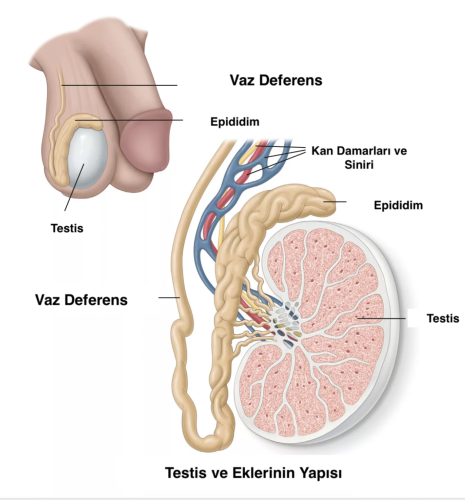
The testicles are one of the most important organs in the male reproductive system. Their primary functions are to produce testosterone, also known as the male hormone, and to facilitate the formation of sperm cells. Testosterone is a hormone necessary for sexual function, but it is also critical for muscle mass, bone health, and overall male health.
Sperm develop more healthily at temperatures lower than normal body temperature. For this reason, the testicles are located outside the body, in a sac called the scrotum. The scrotum keeps the temperature of the testicles approximately 2–4 degrees lower than body temperature, thus providing the ideal environment for sperm production.
In male babies, the testicles first develop inside the abdomen. Shortly before or shortly after birth, the testicles gradually descend into the scrotum. This descent is very important for reproductive health; undescended testicles (cryptorchidism) can increase the risk of infertility or testicular cancer in later life.
It is common for one testicle to be slightly larger than the other, and for one testicle to hang slightly lower than the other. This is completely normal, but both testicles are expected to be approximately similar in size and shape.
What Are Testicular Diseases?
Testicular diseases encompass a broad group of conditions that directly affect male reproductive health and can cause varying degrees of discomfort. While some of these diseases are mild, others may require urgent intervention. Pain, swelling, hardness, tenderness, or sudden changes in size in the testicles are usually the first warning signs.
With early diagnosis, most testicular diseases can be successfully treated. The most common testicular diseases are as follows:
1.Epididymo-Orchitis
What is Epididymo-Orchitis?
Epididymo-orchitis is the inflammation of both the testicle and the epididymis, the sperm-carrying tube located behind the testicle. Inflammation of only the epididymis is called epididymitis, while inflammation of only the testicle is called orchitis. Inflammation of both structures at the same time causes more severe pain and swelling. The condition typically presents with sudden, unilateral testicular pain.
Causes of Epididymo-Orchitis
The causes of epididymo-orchitis vary according to age groups. In young men, the most common cause is sexually transmitted infections, with chlamydia and gonorrhoea being the most frequent pathogens. In older men, the disease usually arises as a result of urinary tract infections or prostate problems. More rarely, trauma, prolonged catheter use, viral infections such as mumps, or tuberculosis can also lead to epididymo-orchitis.
Symptoms of Epididymo-Orchitis
The disease usually begins on one side. The most characteristic symptom is sudden pain and tenderness in the testicle. The scrotum may become red, the testicle may swell, and the pain may spread to the groin. Systemic symptoms such as fever, fatigue, chills, burning during urination, and frequent urination may accompany the condition. In cases associated with sexually transmitted infections, discharge from the penis may also be observed.
How is Epididymo-Orchitis Diagnosed?
The diagnosis is usually made based on the patient's medical history and examination. Urinalysis and culture, urethral discharge culture if sexually transmitted infection is suspected, and blood tests support the diagnosis. Testicular ultrasound is used to confirm inflammation in the testicle and to rule out conditions such as testicular torsion, which requires urgent intervention.
How is Epididymo-Orchitis Treated?
The first step in treatment is the use of antibiotics. The choice of antibiotic depends on the source of the infection. Treatment is supplemented with rest, keeping the testicle elevated and in a comfortable position, cold application, and painkillers/anti-inflammatory drugs. In severe cases or if an abscess develops, hospitalisation and surgical intervention may be required.
Prevention Recommendations
To protect yourself from disease, it is important to use condoms to prevent sexually transmitted infections, not to neglect urinary tract infections, and to get vaccinated against mumps. In addition, people who use catheters for long periods of time should pay attention to hygiene rules to reduce the risk of epididymo-orchitis.
2.Epididymal Cysts
What are Epididymal Cysts?
Epididymal cysts are benign masses that are quite common in adult males, usually developing slowly. These cysts are small, round, fluid-filled sacs. They are usually about the size of a pea, but can grow larger over time and become more noticeable. Epididymal cysts appear at the head of the epididymis, which is located behind the testicle, where the sperm ducts begin. The cysts are usually filled with clear fluid, which may sometimes contain sperm cells.
Causes of Epididymal Cysts
The exact cause of epididymal cysts is often unknown. It is generally thought that they form as a result of blockage of the small channels in the epididymis or fluid becoming trapped. The accumulation of fluid following this blockage causes the cyst to grow over time. It is rare in childhood and mostly occurs in adult males.
Symptoms of Epididymal Cysts
Epididymal cysts are often asymptomatic and are usually detected during self-examination or during an ultrasound performed for another reason. Small cysts do not cause pain. When the cyst grows, a soft and mobile lump may be felt on the testicle. In some cases, the cyst may cause a feeling of heaviness or mild discomfort in the testicle.
How is an Epididymal Cyst Diagnosed?
The diagnosis is usually made through a urological examination. The most commonly used method for a definitive diagnosis is scrotal ultrasonography.
Treatment of Epididymal Cysts
The majority of epididymal cysts do not require treatment. Small cysts that do not cause any symptoms are monitored. However, if the cyst grows and causes discomfort, is cosmetically bothersome to the patient, or causes pain, surgical removal may be considered. The surgical procedure is usually performed on an outpatient basis and involves removing the cyst from the epididymis.
3.Spermatocele
What is a Spermatocele?
A spermatocele is a cystic formation that develops in the upper part of the epididymis, usually on the back side of the testicle, and is filled with sperm and clear fluid. It is similar to an epididymal cyst, but contains live or dead sperm cells. It is usually benign and does not carry a risk of cancer.
Spermatocele is quite common in adult males and often goes unnoticed. It is usually detected during routine examinations or during self-examination of the testicles.
Symptoms of a Spermatocele
Spermatoceles are usually painless and are often discovered by chance. They generally do not cause symptoms, except in cases of large cysts.
The most common symptoms include swelling or a palpable mass in the testicle and, rarely, discomfort during sexual intercourse or physical activity.
How is a Spermatocele Diagnosed?
Diagnosis is typically made through physical examination and scrotal ultrasound.
Treatment of Spermatocele:
Spermatoceles usually do not require treatment. Small, painless cysts are monitored.
However, if the cyst grows rapidly, causes pain or aesthetic concerns, or becomes infected, it is removed surgically in a procedure called spermatocele excision.
4.Hydrocele
What is a Hydrocele?
Hydrocele is a condition that occurs when there is an excessive accumulation of fluid, which is normally present in small amounts, between the membranes surrounding the testicles. This excessive accumulation of fluid causes a balloon-like swelling in the testicle when viewed from the outside. Hydrocele is usually benign and does not cause pain in most cases, but when it becomes very large, it can cause pain and discomfort or cause aesthetic concerns for the patient.
Causes of Hydrocele
The causes of hydrocele vary depending on age and how it develops. Hydrocele seen in newborn male babies is usually caused by a canal between the abdominal cavity and the scrotum that should close after birth but remains open. This type of hydrocele usually disappears on its own within the first year.
Hydrocele in adults is usually acquired and develops later in life for various reasons. Fluid accumulation may occur following trauma, infections (such as epididymitis or epididymo-orchitis), testicular tumours, or surgical procedures.
Symptoms of Hydrocele
The most common symptom of hydrocele is swelling of the testicle, which develops slowly or sometimes suddenly. The swelling is usually painless, and when touched, it feels soft and fluid-filled. Very large hydroceles can cause discomfort when walking or sitting. Patients often complain of a feeling of heaviness or aesthetic concerns.
How is a Hydrocele Diagnosed?
The diagnosis is usually made through a urological physical examination. Ultrasonography is the most commonly used method for definitive diagnosis. Additionally, as the hydrocele is filled with fluid, it allows light to pass through when illuminated with a torch; this simple method is called the "transillumination test". This test helps to distinguish between a mass and fluid accumulation.
Hydrocele Treatment
Treatment for hydrocele is planned according to the patient's age, symptoms, and the size of the hydrocele. Hydrocele seen in infants often resolves spontaneously within the first year, and follow-up is usually sufficient.
In adults, treatment is usually surgical, as the likelihood of the hydrocele resolving spontaneously is low. During surgery, the fluid is drained and the sac causing the fluid accumulation is either removed or inverted and sutured to prevent fluid from collecting again. The simple needle aspiration method is not recommended on its own, as the fluid will re-accumulate within a short period of time.
Don't Delay, Let's Talk
Contact us for more information or to schedule an appointment.
Feneryolu Bağdat Avenue No: 85/1, 34724 Kadıköy / Istanbul – Turkey
5.Varicocele
What is Varicocele?
Varicocele is a condition that occurs when the veins in the testicle become varicose, or enlarged. This condition can be thought of as the testicular equivalent of varicose veins seen in the legs. Varicocele is most often noticed during adolescence or young adulthood. It usually develops gradually and is most commonly seen in the left testicle. This is because the left testicular vein is anatomically connected to the main vein at a right angle. Therefore, the pressure inside the vein is higher than on the right side.
Causes of Varicocele
Although the exact cause of varicocele is not fully understood, the underlying mechanism is the malfunctioning of the valves in the veins. Normally, these valves ensure that blood flows in one direction towards the heart. When the valves malfunction, blood flows backwards and accumulates in the veins, causing them to dilate. Over time, this dilation leads to the appearance of varicocele.
Symptoms of Varicocele
Varicocele does not cause noticeable symptoms in most people and is usually detected during routine examinations. However, some patients may describe a feeling of fullness, heaviness or mild pain in the testicle that increases at the end of the day. Symptoms may become more pronounced, particularly after prolonged standing or physical exertion. In advanced cases, the dilation of the veins may be visible externally, creating a "worm-like" appearance.
As it can negatively affect sperm quality in men who are unable to have children, varicocele may be a significant underlying cause. Therefore, varicocele must always be investigated in these patients.
How is Varicocele Diagnosed?
The diagnosis is usually made through a urological physical examination. During the examination, the varicose veins of the testicles can be felt when the patient is standing. Colour Doppler ultrasound is used to monitor testicular volume and assess vein diameter. This method also measures the amount of blood reflux.
Although varicocele does not always cause symptoms, semen analysis is recommended as it can negatively affect sperm quality in men who are unable to have children.
Varicocele Treatment
Varicocele treatment is determined based on the patient's symptoms and plans for having children. Treatment is generally not required for men who have no symptoms and do not plan to have children; regular monitoring is sufficient.
Surgical treatment is performed in cases where there are complaints or where varicocele is associated with infertility. Currently, the most common method is microsurgical varicocelectomy. In this procedure, the enlarged veins are ligated to allow blood to flow back through normal channels.
Untreated varicocele may increase the risk of infertility in some individuals. In addition, testicular volume loss (atrophy) and chronic discomfort may develop. After surgery, hydroscele formation or recurrence of varicocele may occur, albeit rarely.
6.Testicular Torsion
What is Testicular Torsion?
Testicular torsion is a condition in which the blood vessels supplying the testicle twist around themselves, causing compression and interrupting blood flow. This is an urgent urological problem, and if not treated promptly, the testicular tissue may suffer permanent damage. Although it is most commonly seen in adolescent males, it can occur at any age.
Causes and Risk Factors of Testicular Torsion
The most important cause of testicular torsion is the testicle not being sufficiently fixed in the scrotum. This condition is called "bell clapper deformity" and causes the testicle to be more mobile than normal. Torsion can develop as a result of sudden movements, trauma or turning during sleep.
The most important risk factors for testicular torsion are as follows:
- Adolescence: Risk increases due to rapid testicular growth.
- Family history: Some males may have a congenital structural predisposition.
- Cold weather or sudden contractions: Reflex contraction of the muscles in the scrotum can trigger torsion.
Symptoms of Testicular Torsion
Testicular torsion is characterised by sudden, severe pain and is often accompanied by the following symptoms:
- Sudden and severe pain in the testicle or groin area
- Rapidly developing swelling and redness in the testicle
- Nausea, vomiting, and sometimes fever
- The testicle being positioned higher than normal and in a horizontal position
These symptoms indicate an emergency and a urology specialist should be consulted without delay.
How is a Testicular Torsion Diagnosed?
The diagnosis is usually made based on the patient's history and physical examination. During the physical examination, a testicle that is extremely painful and positioned high is typical.
Colour Doppler Ultrasonography is used to confirm the diagnosis by demonstrating reduced or interrupted blood flow to the testicle.
Treatment of Testicular Torsion
Testicular torsion requires urgent surgery, and the timing of intervention is critical. If intervention occurs within the first 6 hours, the testicle can usually be saved. However, irreversible tissue damage begins after 12 hours, and cases exceeding 24 hours typically result in the removal of the testicle.
During surgical treatment, the testicle is turned in the opposite direction (detorsion) and its viability is checked. If the testicle is viable, it is fixed in place (orchidopexy). At the same time, the opposite testicle must also be fixed to prevent the risk of torsion in the future. If the testicle appears to have lost its viability after detorsion, it must be removed (orchiectomy).
7.Testicular Cancer
What is Testicular Cancer?
Testicular cancer is a malignant tumour resulting from the uncontrolled proliferation of cells in the testicles. Although it is one of the rarer cancers in men, it is the most common urological cancer, particularly in young and middle-aged men. More than 55,000 new cases are reported worldwide each year, with approximately 21,000 in Europe. The lifetime risk of developing testicular cancer is approximately 1 in 250.
Testicular cancer most commonly affects men aged 15–45. When diagnosed early, the success rate of treatment is very high, with a recovery rate exceeding 90%.
Causes and Risk Factors of Testicular Cancer
The exact cause of testicular cancer is unknown, but certain risk factors have been identified.
The most important of these are:
- Undescended testicle (cryptorchidism): Failure of the testicle to descend into the scrotum at birth is one of the most important causes of testicular cancer risk.
- Family history: A history of testicular cancer in a first-degree relative increases the risk.
- Previous history of testicular cancer: Individuals with a history of cancer in one testicle have an increased risk in the other testicle.
- Genetic and hormonal factors: Certain genetic alterations and hormonal imbalances may predispose individuals to the disease.
Symptoms of Testicular Cancer
Testicular cancer often progresses without pain and may not cause noticeable symptoms in the early stages. The most common symptoms are:
- Hardness or painless swelling in the testicle
- A feeling of heaviness or fullness in the testicle
- Rarely, pain or discomfort in the testicle
- In advanced cases, symptoms of metastasis such as pain in the back or abdomen, shortness of breath, or bone pain
How is Testicular Cancer Diagnosed?
The diagnostic process begins with a physical examination, followed by an ultrasound to assess the structure of the testicle. Blood tests are performed to measure tumour markers (AFP, β-HCG, LDH). A definitive diagnosis is usually made after surgical removal of the testicle (orchiectomy) and pathological examination.
Testicular Cancer Treatment
The treatment of testicular cancer is planned based on the cell type and stage of the tumour:
- Surgery: The first line of treatment is usually orchiectomy (removal of the affected testicle).
- Chemotherapy: This is used in advanced stages or for aggressive tumour types.
- Radiotherapy: This is more commonly used in early stages for seminoma tumours.
The vast majority of cases diagnosed early can be completely cured. Regular follow-up and imaging are crucial for managing the risk of recurrence.
Don't Delay, Let's Talk
Contact us for more information or to schedule an appointment.
Feneryolu Bağdat Avenue No: 85/1, 34724 Kadıköy / Istanbul – Turkey