What Is a Penile Prosthesis (Happiness Rod)? How Does It Work?
Prof. Dr. Şükrü Kumsar has more than 20 years of experience in penile prosthesis surgery. Throughout his career, he has performed over 100 penile implant procedures, helping men with advanced erectile dysfunction (ED) regain sexual function and improve their quality of life through personalized, evidence-based surgical care.

Penile Prosthesis (Happiness Stick) in Kadıköy, Istanbul
Searches such as penile prosthesis Istanbul Anatolian Side and penile prosthesis Kadıköy Istanbul have increased significantly in recent years. The main reason for this is the growing awareness of erectile dysfunction (ED) and the better understanding of permanent treatment options. A penile prosthesis, commonly known as a “happiness stick,” is one of the most effective and permanent solutions for patients who do not benefit from medications or other treatments. It provides controlled and sufficient erections, significantly improving sexual performance and overall quality of life. In this article, you will find comprehensive and evidence-based answers to frequently asked questions such as what a penile prosthesis is, who it is suitable for, how it works, types of implants, the surgical process, and how treatment is planned in Kadıköy, Istanbul.
İçerik
- What Is a Penile Prosthesis (Happiness Rod)? How Does It Work?
This system consists of special prosthetic cylinders placed inside the penis, allowing it to achieve sufficient rigidity for sexual intercourse. The prosthesis does not damage the penile blood vessels or nerves; instead, it provides a mechanically reliable alternative to the natural erection mechanism.
Worldwide and in Turkey, penile prosthesis implantation surgery is considered the gold standard treatment for erectile dysfunction that does not improve with medications, injections, or treatments such as ESWT. The success rate of the surgery exceeds 95%, and post-operative patient and partner satisfaction rates are very high.
In men who receive a penile prosthesis:
- Erectile dysfunction is permanently resolved,
- Sexual performance and self-confidence significantly improve,
- Orgasm and ejaculation mechanisms are preserved,
- Penile sensation and pleasure remain unchanged.
Thanks to advanced-technology penile prostheses used today, the natural appearance of the penis and a natural erection mechanism are preserved.
In particular, three-piece inflatable hydraulic prostheses provide results closest to a natural erection.
Is a Penile Prosthesis a Permanent Solution?
Yes. Once implanted, the prosthesis is designed for lifelong use.
The malfunction rate is low, and with current technologies, prosthesis lifespan ranges between 15 and 20 years.
Does Pleasure and Orgasm Change After Penile Prosthesis Surgery?
No. Sexual pleasure, ejaculation, and orgasm do not change after penile prosthesis surgery. Patients often report the same level of pleasure, and in many cases, even greater confidence during sexual activity.
Why Is a Penile Prosthesis Implanted? For Which Patients Is It Appropriate?
A penile prosthesis is a surgical method that provides permanent treatment for men who cannot achieve an erection despite medications, injection therapies, or shockwave therapy. Today, it is accepted as the most reliable and highest-success treatment option for severe erectile dysfunction.
Who Is a Penile Prosthesis Suitable For?
- Patients with severe erectile dysfunction
- Men with erection loss due to vascular insufficiency
- Men with erectile dysfunction related to diabetes
- Patients who develop erectile dysfunction after prostate surgery
- Those who do not benefit from medications, injections, or ESWT
- Patients with erectile dysfunction associated with Peyronie’s disease
Medical Indications for Penile Prosthesis Implantation
1) Severe Erectile Dysfunction
If the patient does not respond to:
- Oral medications (PDE5 inhibitors)
- Penile injection therapies
- Vacuum devices
- ESWT
a penile prosthesis is indicated.
✔ Success rate exceeds 95%.
✔ Gold standard treatment for medication-resistant patients.
2) Erectile Dysfunction Due to Diabetes
Diabetes affects penile blood vessels and nerves, leading to severe erectile dysfunction.
In this group, prosthesis treatment has the highest satisfaction rates, exceeding 90%.
3) Erectile Dysfunction After Prostate Cancer Surgery
Erectile dysfunction is common after prostate surgery for prostate cancer, and medications are often insufficient. Penile prosthesis offers the most effective and permanent solution.
4) Peyronie’s Disease with Erectile Dysfunction
Peyronie’s disease causes penile curvature, plaques, shortening, and erection loss.
In these patients, penile prosthesis:
✔ Corrects curvature
✔ Provides permanent erectile function
5) Penile Trauma and Neurovascular Injury
In cases of permanent erection loss after trauma, fracture, vascular damage, or penile surgery, a penile prosthesis is the most appropriate treatment.
6) Vascular Erectile Dysfunction (Venous Leak)
Medications, injections, or shockwave therapy are usually ineffective. Penile prosthesis is the most reliable solution.
In Which Situations Should a Penile Prosthesis Be the First Choice?
- Patients with Peyronie’s disease accompanied by severe erectile dysfunction
- Patients who develop complete loss of erection after prostate surgery
- Patients with advanced erectile dysfunction due to diabetes
- Patients who do not respond at all to medication, injection, or shockwave therapies
Types of Penile Prostheses
Penile prostheses are categorized into two main types:
1) Inflatable Penile Prostheses
-Three-Piece Inflatable Penile Prosthesis
Today, this is the most commonly preferred prosthesis type worldwide and provides results that most closely mimic natural erection.
Components:
- Two cylinders placed in the penis
- A fluid reservoir placed in the abdomen
- A pump placed in the scrotum
How it works:
When the pump is squeezed, fluid transfers to the cylinders, creating an erection. Pressing the deflation button returns the fluid to the reservoir, making the penis flaccid.
Advantages:
- Most natural appearance and erection
- No visible external components
- High patient and partner satisfaction (>95%)
Who Is It Suitable For?
-
It is an ideal option for patients with an active and regular sexual life who seek maximum rigidity and control during erection.
-
It offers aesthetic advantages for patients who value a natural appearance and want the penis to remain soft and natural in daily life.
-
It is the most preferred inflatable prosthesis type for young and middle-aged patients who expect long-term comfort and performance.

-Two-Piece Inflatable Penile Prosthesis (Two-Piece Hydraulic Prosthesis)
Two-piece inflatable penile prostheses are devices that operate with a hydraulic mechanism but do not require the placement of a separate fluid reservoir inside the abdomen. Because they require a more limited surgical field, they offer a safe and effective alternative for selected patient groups.
In this type of prosthesis, the system consists of two main components:
-
Two inflatable cylinders placed inside the penis
-
A pump system containing an integrated fluid reservoir, placed in the scrotum
How Does It Work?
When the pump placed inside the scrotum is manually squeezed, the fluid within the pump–reservoir unit is transferred into the cylinders, resulting in penile rigidity.
After sexual intercourse, when the deflation mechanism on the pump is activated, the fluid flows back into the pump unit and the penis returns to a flaccid state.
Advantages
-
Provides the most natural appearance and a natural erection sensation
-
No external device or component is visible in daily life
-
Allows the penis to remain soft and aesthetically natural when deflated
-
Ensures high patient and partner satisfaction (over 95%)
Who Is It Suitable For?
-
It is an ideal option for patients with an active and regular sexual life who seek maximum rigidity and control during erection
-
It offers aesthetic advantages for patients who value a natural appearance and want the penis to remain soft and natural in daily life
-
It is the most preferred inflatable prosthesis type for young and middle-aged patients who expect long-term comfort and performance

2) Malleable (Semi-Rigid) Penile Prosthesis
Malleable penile prostheses consist of two flexible metal alloy rods placed inside the penis. With this type of prosthesis, the penis remains constantly firm; however, it can be manually positioned upward or downward during daily life and sexual activity.
Because it does not contain a mechanical pump or fluid system, its use is extremely simple and practical.
How Does It Work?
After implantation, the penis remains firm at all times. During sexual intercourse, the penis is positioned upward, and after intercourse, it can be bent downward and comfortably concealed inside underwear in a discreet manner.
Advantages
-
No risk of mechanical failure, as it does not contain any mechanical components
-
The most economical penile prosthesis option
-
Shorter surgical time and a technically simpler procedure
-
Easy to learn and use; no pump mechanism required
-
Can be safely preferred especially in elderly patients
Who Is It Suitable For?
-
An ideal option for patients with limited manual dexterity who may have difficulty using a pump
-
Frequently used in elderly patients with multiple comorbidities where a shorter and simpler surgical procedure is preferred
-
Suitable for patients seeking simple use, low maintenance, and an economical solution
-
An effective alternative for patients who do not wish to allocate a budget for three-piece inflatable prostheses or who feel that such systems are unnecessary for them

Penile Prosthesis Types – Summary Table
| Prosthesis Type | Advantages | Who Is It Suitable For? |
|---|---|---|
| 3-Piece Inflatable | Most natural appearance, most natural erection, discretion, high satisfaction | Young–middle-aged patients, active sexual life, those seeking a natural appearance |
| 2-Piece Inflatable | Easier surgery, practical use | Patients with prior abdominal surgery, those preferring a simpler system |
| Malleable (Semi-Rigid) | Cost-effective, no risk of mechanical failure, simple use | Elderly patients, those with comorbidities, patients with limited manual dexterity |
Which Penile Prosthesis Provides the Most Natural Appearance?
✔ Most natural erection sensation → 3-Piece Inflatable Prosthesis
✔ Most practical to use → Malleable (Semi-Rigid) Prosthesis
✔ Easiest surgical procedure → 2-Piece Hydraulic Prosthesis
Penile Prosthesis Cost in Istanbul
The cost of a penile prosthesis may vary depending on the selected prosthesis type and brand, as well as the scope of the procedures performed.
How Does a Penile Prosthesis Work?
1) Inflatable Prosthesis Working Mechanism
-
The pump is squeezed → Fluid moves from the reservoir into the cylinders
-
The cylinders fill → The penis achieves a firm and natural-looking erection
-
The deflation button is pressed → The fluid returns, and the penis becomes completely soft
It is a highly safe system and does not damage the penile blood vessels or nerves

2) Malleable (Semi-Rigid) Prosthesis Working Mechanism
-
Before intercourse, the penis is positioned upward to achieve a firm and upright state suitable for sexual activity
-
When not in use, it is bent downward and discreetly concealed under clothing during daily life
It is the prosthesis model with the lowest risk of mechanical failure.

Don't delay, let's meet now !
- Feneryolu Bagdat Avenue No 85/1 Postal Code: 34724 Kadıköy/İstanbul - Turkey
What Does the Penis Look Like After Penile Prosthesis Implantation?
-
With a 3-piece prosthesis, the penis looks quite natural when deflated
-
The pump and reservoir components are not visible from the outside
-
Most patients’ partners do not notice the presence of the prosthesis
Which Prosthesis Is More Suitable for Which Patients?
1) Who Is the 3-Piece Prosthesis Recommended For?
-
Those seeking the most natural aesthetics and rigidity
-
Patients with sufficient manual dexterity to use the prosthesis
-
Younger patients
-
Individuals who want a natural appearance in their social life
2) Who Is the 2-Piece Prosthesis Recommended For?
-
Patients who have undergone prior abdominal surgery
-
Those who prefer a simpler system
-
Patients with sufficient manual dexterity to use the prosthesis
3) Who Is the Malleable Prosthesis Recommended For?
-
Elderly patients
-
Patients with limited manual dexterity
-
Those seeking a more economical option
How Is Penile Prosthesis Surgery Performed?
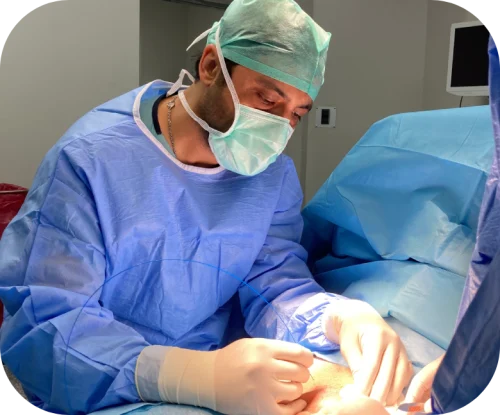
Penile prosthesis surgery is a safe, fast procedure with a high success rate when performed by experienced urologists. It usually takes 45–60 minutes, and patients are often discharged on the same day or the following day.

How Is Penile Implant Surgery Performed?
Penile implant surgery is a safe, quick procedure with a high success rate when performed by experienced urologists. It generally takes 45–60 minutes, and patients are usually discharged on the same day or the following day.
In modern inflatable penile implants, cylinders, connecting tubes, pumps, and reservoir systems have undergone significant improvements over the years. More kink-resistant tubing, lockout systems designed to prevent unintended inflation, easier-to-use pumps, and pre-connected systems that reduce the number of connection points are among these developments. The aim is both to reduce the risk of mechanical failure and to make the implant easier for patients to use.
In the future, the use of more durable and flexible materials is expected to further extend the lifespan of penile implants. Since these devices are designed to remain inside the body for many years, advances in material technology are likely to play an important role in the future of penile implants.
With inflatable penile implants, the patient needs to manually operate a pump located inside the scrotum. This may be difficult, particularly for patients with reduced hand strength or dexterity.
For this reason, one of the new technologies currently being investigated involves implants that can be activated externally without the need for manual pumping. The aim of developing remotely controlled systems is to make the implant easier to use while potentially reducing mechanical problems associated with pumps and hydraulic connections.
A more advanced approach involves implants made from shape-memory materials. Researchers are investigating heat-sensitive materials capable of changing their rigidity. In an experimental model, an implant made from a nickel-titanium alloy was activated within approximately 45 seconds using externally applied magnetic energy.
Such a system could potentially reduce the need for pumps, reservoirs, and hydraulic connections in the future. However, important questions regarding long-term safety, achievable rigidity, ease of use, and the possibility of unintended activation by magnetic fields still need to be clarified. Therefore, these technologies are not currently alternatives to standard penile implants in routine clinical practice.
One of the main concerns among patients considering penile implant surgery is penile length. Therefore, one emerging approach is to prepare the penile tissue before surgery as much as possible and preserve the existing length.
For this purpose, the use of vacuum and penile traction devices before surgery has been investigated. In a small randomized study, patients who used a vacuum device for 10–15 minutes per day for at least one month before surgery experienced an average 0.8 cm increase in stretched penile length, compared with an average change of 0.2 cm in patients who did not use the device. Surgeons also reported that corporal dilation during surgery was easier in patients who had used vacuum therapy.
In another small study, patients who underwent traction therapy for two hours per day for 2–4 months before surgery demonstrated an average increase of 1.5 cm in length measured during surgery. However, 60% of patients reported difficulty using the device, while 40% reported pain. Therefore, although these approaches appear promising, the gains may be limited and require a high level of patient compliance.
Another area of interest in newer approaches is how patients perceive their penile length after penile implant surgery.
This is different from the concept of the implant itself increasing penile length. In some patients, correcting the skin attachment between the penis and scrotum may help increase the visible portion of the penis. In a study evaluating this approach, known as “ventral phalloplasty,” 36 of 43 patients who underwent the procedure together with penile implant surgery reported that they perceived an increase in penile length.
Various techniques involving tissues in the pubic region have also been investigated to increase visible penile length. However, these additional procedures are not part of standard penile implant surgery. Because additional surgical procedures may also introduce additional risks of complications, they should be considered in selected patients and performed by experienced surgeons.
The reservoir of a three-piece inflatable penile implant is traditionally placed in a specific anatomical space within the pelvis. However, particularly in patients who have previously undergone prostate surgery or other pelvic/retroperitoneal procedures, the anatomy of this area may have changed.
For this reason, new reservoir designs and alternative placement locations have been investigated. Flatter or cloverleaf-shaped reservoirs have made it easier to place the reservoir in alternative anatomical locations outside the traditional space.
The aim of these alternative approaches is particularly to reduce the risk of rare but serious complications such as injury to the bladder, bowel, or major blood vessels. However, reservoirs positioned closer to the surface may create different problems, such as being palpable or becoming displaced, particularly in thin patients. Therefore, reservoir placement should be planned according to the patient's anatomy and previous surgical history.
One of the most important issues in the development of penile implant technology is infection. Today, the use of antibiotic-coated or hydrophilic-coated implants plays an important role in reducing the risk of infection.
However, new research is focusing not only on killing bacteria but also on preventing biofilm formation on the surface of the implant.
Biofilm is a protective layer formed when microorganisms attach to the surface of an implant. Once this structure develops, bacteria may be better protected from both the immune system and antibiotics. Because bacterial colonies may begin to form in as little as 16 hours, infection-prevention measures around the time of surgery are particularly important.
More experimental studies are investigating ways to disrupt established biofilms. For example, ultrasound-targeted microbubbles used in combination with antibiotics and the effects of certain antimicrobial peptides against biofilms have been investigated. However, these methods are not yet standard treatments for penile implant infections, and further research is required.
Alongside technological advances, important changes have also been made to surgical techniques. One of these is the “no-touch” technique.
With this approach, contact between the implant and the skin of the genital area is minimized as much as possible. When the implant placement stage begins, previously used gloves and certain surgical materials are replaced. Infection rates as low as approximately 0.35% have been reported with this approach in patients receiving their first penile implant.
In addition, treating urinary tract infections before surgery, controlling blood glucose levels in patients with diabetes, stopping smoking at least four weeks before surgery, appropriate antibiotic prophylaxis, and the use of antibiotic-coated implants are all components of strategies aimed at reducing the risk of infection.
New approaches continue beyond the completion of surgery. Particular attention is being given to improving postoperative pain control and reducing the need for strong pain medications.
Multimodal pain management approaches, including local anesthetic blocks applied to the penis or pudendal nerve, long-acting local anesthetics, and the combined use of paracetamol or anti-inflammatory medications in appropriate patients, have been reported to reduce the need for strong pain medication after surgery.