Shockwave Therapy (ESWT) for Erectile Dysfunction
Erectile dysfunction (ED) is one of the most common male sexual health conditions and can significantly affect both quality of life and self-confidence. ESWT (shock wave therapy) has emerged as a modern, non-surgical, and painless treatment option that aims to support penile vascular health and improve blood circulation. At Prof. Dr. Şükrü Kumsar’s Urology and Andrology Clinic in Kadıköy, Istanbul, erectile dysfunction treatments are individually tailored to each patient, while ESWT procedures are performed in accordance with the latest scientific evidence and clinical guidelines.
Prof. Dr. Şükrü Kumsar has many years of experience in providing Low-Intensity Extracorporeal Shock Wave Therapy (Li-ESWT) for the treatment of erectile dysfunction (ED). Throughout his career, he has planned and delivered Li-ESWT treatment for hundreds of patients, offering individualized care based on the latest evidence-based clinical guidelines.

Erectile dysfunction is one of the most common sexual health problems in men, which can affect quality of life and self-confidence. Today, alongside medication, modern treatment options that target the underlying vascular structure are also coming to the fore. One of these is ESWT (Low Intensity Extracorporeal Shock Wave Therapy), known as low-intensity shock wave therapy.
ESWT is a non-surgical and pain-free treatment method designed to support the vascular structure and blood circulation in the penis. It can help improve natural erection quality, particularly in men experiencing mild to moderate erectile dysfunction.

What is Shock Wave Therapy (ESWT)?
Shockwave therapy is based on the principle of applying low-intensity sound waves to penile tissue. The aim is to support the remodelling of the vascular structure within the penis, increase blood flow and improve erection quality.
ESWT treatment is not a surgical procedure. No incisions are made during the procedure, no needles are used, and the patient can resume their daily activities on the same day.
Low-intensity shock waves:
- may promote new blood vessel formation,
- improve the function of existing blood vessels,
- and increase blood flow in penile tissue
.
For this reason, ESWT has become one of the most extensively researched regenerative treatment options for erectile dysfunction in recent years.
Who is ESWT Suitable For in Cases of Erectile Dysfunction?
ESWT treatment may yield more successful results particularly in men experiencing erectile dysfunction caused by vascular issues.
Patients Who May Be Suitable for ESWT |
Who May Not Be Suitable for ESWT? |
|---|---|
|
|
The appropriate treatment option for each patient should be determined following a detailed urological assessment, physical examination and, if necessary, penile Doppler ultrasound.
How is ESWT Applied for Erectile Dysfunction?
The ESWT procedure is a comfortable treatment carried out in an outpatient setting. During the treatment, low-intensity shock waves are applied to specific areas of the penile tissue using a specialised device.
During the procedure:
- no incisions are made,
- no injections are administered,
- no anaesthesia is required,
- the patient can return to their daily life immediately after the procedure.
The procedure is generally performed on different areas of the penile shaft in accordance with specific protocols.

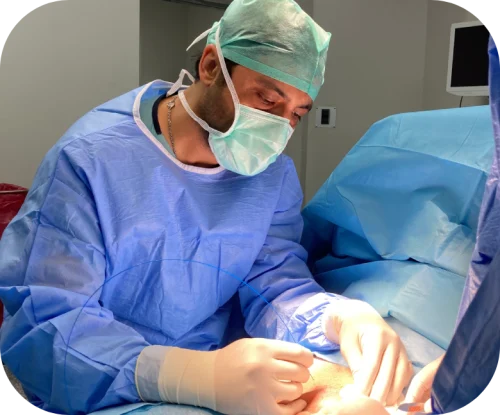
Shock Wave Therapy (ESWT) for Erectile Dysfunction Cost in Istanbul Kadıköy
ESWT (shock wave therapy) is planned individually according to the underlying cause of erectile dysfunction and the patient’s vascular structure. The number of sessions, energy level, and treatment protocol are determined after a detailed urological evaluation.
ESWT Treatment Process
| Treatment Characteristics | Information |
|---|---|
| Procedure duration | Approximately 15–20 minutes |
| Number of sessions | Usually 6–12 sessions |
| Anaesthesia | Not required |
| Pain | Usually a mild sensation of vibration |
| Hospital stay | Not required |
| Return to daily life | On the same day |
| Sexual intercourse | Usually possible on the same day or the following day |
| Type of procedure | Non-surgical and non-invasive |
The Advantages and Disadvantages of ESWT Treatment
Advantages
| Advantages | Explanation |
|---|---|
| No surgical procedure is required | No incisions or stitches are required |
| Pain-free | Most patients tolerate the procedure comfortably |
| Quick return to daily life | No hospital stay is required |
| Targets the vascular structure | Aims to address the underlying circulatory problem |
| May reduce the need for medication | Some patients may require less medication |
| May support natural erections | May improve erection quality |
Disadvantages
| Disadvantages | Explanation |
|---|---|
| The same effect may not be observed in every patient | The success rate depends on patient selection |
| May be insufficient in advanced cases | Some patients may require additional treatment |
| Multiple sessions may be required | It is not a one-off procedure |
| There is no guarantee of a permanent solution | A reassessment may be necessary over time |
Comparison of ESWT with Other Erectile Dysfunction Treatments
| Treatment Method | Mechanism of Action | Administration Method |
|---|---|---|
| ESWT | Supporting vascular structure | Non-surgical |
| PDE5 inhibitors | Temporary vasodilation | Medication |
| Penile injection | Inducing a temporary erection | Injection |
| PRP / Exosomes | Regenerative approach | Injection |
| Penile prosthesis | Mechanical erection | Surgery |
ESWT treatment is particularly noteworthy as a non-surgical option aimed at supporting the natural erection mechanism.

Success Rate of ESWT for Erectile Dysfunction
Success rate of ESWT treatment:
- the patient’s age,
- vascular structure,
- presence of diabetes,
- smoking,
- hormonal status,
- the duration of the erectile dysfunction
and many other factors.
Scientific studies report positive results, particularly in cases of mild to moderate vascular erectile dysfunction.
In some patients:
- an improvement in erection quality,
- better response to medication,
- improved duration of sexual intercourse,
- increased self-confidence
may be observed.
However, it should be borne in mind that the same level of results cannot be achieved in every patient.
Which Doctor Performs ESWT Treatment?
Erectile dysfunction and ESWT treatment are managed by urologists, particularly those specialising in andrology.
It is of great importance that the underlying cause is correctly assessed prior to treatment. For this reason, the assessment should be carried out by an experienced urology and andrology specialist.
ESWT Treatment for Erectile Dysfunction in Kadıköy, Istanbul
Treatments for erectile dysfunction are available at modern urology and andrology clinics in Kadıköy and on the Asian side of Istanbul. Prior to ESWT treatment, it is important to conduct a detailed assessment of the patient, investigate the underlying causes and develop a personalised treatment plan.
At Prof. Dr. Şükrü Kumsar’s Urology and Andrology Clinic, treatments for erectile dysfunction are planned on a personalised basis, and ESWT therapy is administered in accordance with current scientific approaches.