Diabetes and Erectile Dysfunction in Men
2 September 2025
Testicular Pain
17 September 2025İçerik
What is a Prostate Biopsy?
A prostate biopsy is a procedure that involves taking small tissue samples from the prostate gland using a thin needle. The tissue samples are examined under a microscope to determine whether they are cancerous. If cancer is detected, the biopsy results indicate how aggressive the cancer is, or in other words, the likelihood of it spreading beyond the prostate.
What Are the Advantages of a Prostate Biopsy?
- It is the only way to definitively determine whether you have prostate cancer.
- It helps determine how aggressive the existing cancer may be, i.e., its likelihood of spreading.
- It can detect faster-growing cancers at an early stage, which may help prevent the cancer from spreading to other parts of the body with treatment.
How Is a Prostate Biopsy Performed?
There are two main types of biopsy:
1.Transrectal Prostate Biopsy: A needle is inserted through the rectum (anus) wall.
2.Transperineal Prostate Biopsy: The needle is inserted through the skin between the testicles and the anus.

What is a transrectal biopsy?
In a transrectal biopsy, the doctor inserts a thin needle into the rectum, which is the back wall of the prostate, and uses ultrasound guidance to take small samples of prostate tissue.
| How is the procedure performed? | |
|---|---|
| Patient Position | The patient lies on their side on the examination table with their knees drawn up toward their chest. |
| Ultrasound Probe | The doctor or nurse inserts an ultrasound device into the rectum (anus). Gel is applied to facilitate the insertion. |
| Imaging | The ultrasound probe scans the prostate and creates an image on a screen. The doctor determines which areas to sample based on these images. |
| Local Anesthesia | Before the procedure, local anesthesia is administered to numb the area around the prostate and reduce discomfort. |
| Tissue Sampling | A needle next to the probe is used to pass through the rectal wall and take samples from the prostate tissue. Typically, 12 small tissue samples are collected from different areas. |
| Procedure Duration | A transrectal biopsy usually takes between 10 and 15 minutes. |
| Post-Procedure Check | After the biopsy, the doctor may ask you to urinate. This is to check for any difficulty urinating due to swelling of the prostate. |
What is a transperineal biopsy?
In a transperineal biopsy, the needle is inserted through the skin between the testicles and the anus and directly into the prostate tissue.
How is the procedure performed?
- This biopsy can be performed under general anesthesia (full sedation) or local anesthesia (numbing of the area).
- If general anesthesia is used, you will not feel anything during the procedure. However, general anesthesia may have side effects, which your doctor will explain to you before the procedure.
- If local anesthesia is used, you will be awake during the procedure, but you will not feel any pain because the prostate and surrounding area will be numb.
- The doctor inserts the ultrasound probe into the rectum and uses gel.
- An image of the prostate appears on the screen and guides the placement of the biopsy needle.
- A transperineal biopsy typically takes 20 to 40 minutes.
- After the anesthesia, you will need to rest for a few hours.
- It is important to check whether you can urinate after the procedure, as swelling and inflammation in the prostate following the biopsy may prevent you from urinating.
Don't delay, let's meet now !
- Feneryolu Bagdat Avenue No 85/1 Postal Code: 34724 Kadıköy/İstanbul - Turkey
What is Prostate Fusion Biopsy?
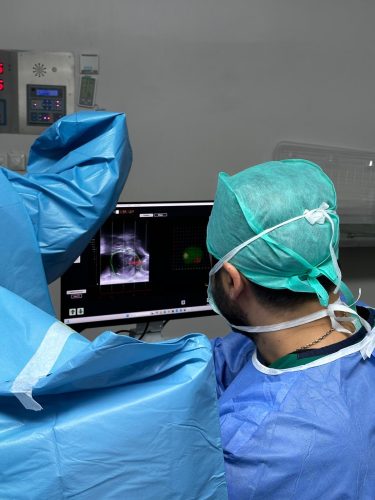
- In a prostate fusion biopsy, areas suspected of cancer in the prostate, as identified in a previously performed MRI ( ), are determined, and these areas are fused with the ultrasound image—that is, overlaid and combined—immediately before the procedure.
- In fusion biopsy, a targeted tissue sample is taken from these suspicious areas under anesthesia and direct visualization.
- The procedure takes approximately 20-30 minutes, and there is no need for hospitalization afterward.
What Are the Advantages of Fusion Biopsy?
- The most significant advantage is its ability to detect clinically significant prostate cancer more effectively than the traditional method.
- Fusion biopsy is typically performed under anesthesia, with the patient sedated. As a result, the patient does not experience any discomfort or pain during the procedure. In contrast, traditional biopsy is often performed under local anesthesia .
What is Perineal Fusion Biopsy?
- Prostate fusion biopsy can be performed using two methods: transrectal and perineal.
- In the transrectal method, the biopsy needle is inserted through the rectum to obtain tissue samples from the prostate, while in the perineal method, the needle is inserted through the perineal region, which is the skin area immediately above the anal region, to obtain tissue samples.
What Are the Advantages of Perineal Fusion Biopsy?
- The risk of infection and sepsis, which are the most important complications associated with prostate biopsy using the perineal method, is approximately 10 times lower.
- The transrectal method allows for better sampling of tumor foci in the anterior portion of the prostate that are inaccessible via the transrectal approach.
What Are the Possible Side Effects After a Biopsy?
Side effects may occur after a biopsy. These side effects can vary from person to person and may not occur with the same intensity in every man.
- Some patients may experience pain or discomfort in the anal area for a few days after the biopsy.
- After a transperineal biopsy, bruising and discomfort may occur at the site where the needle was inserted.
- You may notice a small amount of blood in your urine or stool, which is often considered normal for the first two weeks after the biopsy.
- Red or dark brown blood spots may be observed in the semen (seminal fluid) for several months. This condition resolves on its own.
- There is a risk of infection developing after a biopsy. This risk is higher with a transrectal biopsy compared to a transperineal biopsy.
- In less than one out of every 100 men who undergo a transrectal prostate biopsy, a more serious infection may occur, which may require hospitalization.
- If the infection spreads into the bloodstream, it is called sepsis and requires immediate medical attention.
- A small number of men may suddenly be unable to urinate painfully after the biopsy. This condition is called acute urinary retention.
- In a small number of men, erectile dysfunction (difficulty achieving or maintaining an erection) may occur after a biopsy.