Case Study on Penile Prosthesis Surgery (Treatment of Erectile Dysfunction)
20 April 2026
Combined Penis Lengthening and Thickening Surgery in a Patient from Russia: A Case Study
14 May 2026ESWT Treatment in Istanbul: Why Choose a Specialist Doctor?
Istanbul offers a wide range of ESWT treatment options. Access to this treatment is particularly convenient in areas such as Kadıköy, Feneryolu, and the Asian side of Istanbul. High success rates can be achieved with proper patient selection and appropriate protocols.
ESWT is not a treatment method that can simply be administered by a healthcare professional without urological training by merely operating a device. It is a treatment method that must be administered by a urologist with a thorough understanding of anatomy and physiology.
Focusing at the correct angle, adjusting the energy level (mJ) according to the patient’s stage, and determining the session intervals correctly increases the success rate of the treatment by 40%. In a professional urology clinic, procedures performed with state-of-the-art devices minimize the risk of complications while maximizing the chances of success.
This content is for informational purposes only; for diagnosis and treatment, please consult a qualified healthcare professional.
ESWT (Extracorporeal Shock Wave Therapy), also known as shock wave therapy, is a modern treatment method that promotes tissue healing using low-intensity acoustic waves applied from outside the body. Originally used for breaking kidney stones, this technology began to be used in the treatment of urological diseases starting in the 1990s.
Today, ESWT stands out as an effective treatment option for many urological conditions, particularly due to its effects in increasing blood flow, supporting new blood vessel formation (angiogenesis), and accelerating tissue regeneration.
In this article, you will find answers to all your questions—such as what ESWT is, what it is used for, and which urological conditions it treats—backed by scientific data.
What Is ESWT? How Does It Work?
ESWT is a non-invasive treatment method based on the principle of focusing high-pressure sound waves at a specific point and delivering them to a targeted area of the body.
ESWT treatment creates micro-level stimulation in tissues, resulting in the following effects:
- Increases blood flow
- Supports new blood vessel formation
- Accelerates tissue regeneration
- Reduces inflammation
- Supports nerve healing
Thanks to these effects, it provides significant benefits, particularly in vascular diseases.
How Does the ESWT Device Work?
The ESWT device generates shock waves using electromagnetic or electrohydraulic principles. When these waves reach the tissue, they create two main effects:
- Mechanical Effect: Shock waves create micro-level stress in the tissue, mechanically disrupting hardened structures (such as calcium deposits or plaques).
- Biological Effect (Cavitation): By creating microbubbles in the tissue, it accelerates blood flow and draws the body’s “healing factors” to the area. This process triggers new blood vessel formation (neovascularization).
How Is ESWT Treatment Administered? (Step-by-Step Process)
Many patients wonder not only what ESWT treatment is but also what they will feel during the procedure. The process is actually quite comfortable.
ESWT treatment is administered in a clinical setting using specialized devices. Anesthesia is generally not required during the procedure, and patient comfort is very high.
- Initial Examination: Before treatment, the patient’s symptoms are assessed, and a urological examination is conducted to determine eligibility for ESWT.
- Focusing and Gel Application: A medical gel that facilitates the transmission of sound waves is applied to the treatment area (the penis or prostate region).
- Application Method: The device’s applicator head is placed on the target area. When the device is activated, shock waves are emitted accompanied by rhythmic “tick-tick” sounds.
- Session Duration: An average session lasts between 15 and 20 minutes. Depending on the patient’s condition, treatment protocols consisting of 6–12 sessions may be administered. The procedure is performed 1–2 times per week, with approximately 2,000–3,000 shock waves delivered per session.
- Post-Procedure: Immediately after the session, the patient can stand up, drive, and return to work.
Advantages and Disadvantages of ESWT
Advantages
- Non-Surgical Solution: Requires no incisions, stitches, or hospital stay.
- No Anesthesia Required: Almost everyone, including patients with a low pain threshold, can undergo this procedure without anesthesia.
- Protects Against Medication Side Effects: You won’t have to deal with side effects such as headaches or vision problems caused by medications used specifically for erectile dysfunction.
- Aims for Permanent Improvement: It doesn’t just mask symptoms; it addresses the root cause by increasing blood flow to the tissues.
- Quick Procedure: It’s so fast it can even be done during a lunch break.
Disadvantages
- The effects are not felt after the first session; they typically begin to be noticed after 3–6 sessions.
- In some patients with severe vascular damage or nerve damage (such as after prostate cancer surgery), the success rate may be lower compared to others.
- Repeated sessions may initially seem more expensive than a single-dose medication (though they are more cost-effective in the long run).

What Is the Cost of ESWT in Istanbul?
ESWT (shockwave therapy) prices in Istanbul are not fixed and vary depending on the patient’s specific treatment plan. The most important factors determining the price include the number of sessions, the technology of the device used, the physician’s experience, and the severity of the condition.
ESWT Treatment in Kadıköy – Address: Feneryolu, Bağdat Avenue No: 85/1 Postal Code: 34724 Kadıköy / Istanbul – Türkiye
Applications of ESWT in Urology
According to scientific studies, ESWT is used in urology to treat various conditions:
1. Erectile Dysfunction
Erectile dysfunction is the inability to achieve sufficient rigidity for sexual intercourse. ESWT treatment is particularly effective for erectile dysfunction caused by vascular diseases.
ESWT supports the natural erection mechanism by increasing blood flow to the penis. This treatment is also included in the guidelines of the European Association of Urology.

2. Peyronie’s Disease
Peyronie’s disease is characterized by plaque formation and curvature of the penis. ESWT treatment is particularly effective in reducing pain.
However, according to current scientific data, its effect on curvature is limited.

3. Chronic Pelvic Pain Syndrome
Chronic pelvic pain is characterized by long-term pain in the pelvic region. This condition is generally associated with muscle spasms and myofascial trigger points.
ESWT therapy can reduce pain by relaxing the pelvic floor muscles.
4. Wound Healing
ESWT accelerates tissue regeneration, particularly in hard-to-heal wounds. Positive results have been reported in wound healing following Fournier’s gangrene.
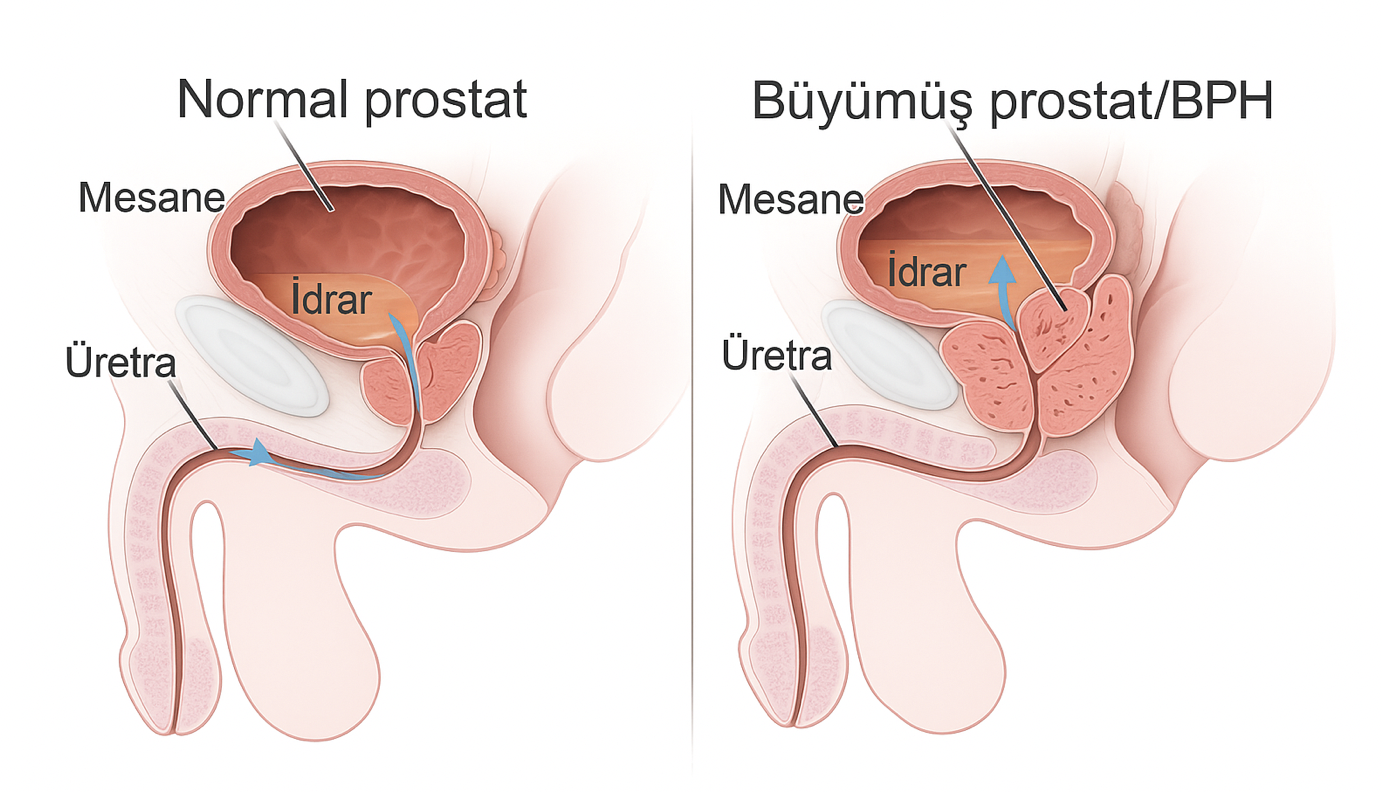
5. Benign Prostatic Hyperplasia (LUTS)
It has been demonstrated that ESWT has a relaxing effect on the bladder neck in urinary problems associated with prostate enlargement.
Some studies have yielded results similar to those of medication.
Conclusion
ESWT (shockwave therapy) stands out as a non-surgical, safe, and effective treatment option in urology.
It offers a modern and scientific approach, particularly for conditions such as erectile dysfunction, chronic pelvic pain, and Peyronie’s disease. When applied to the right patient, it can significantly improve quality of life.