Erectile Dysfunction in a Diabetic Patient: 1-Year Outcome with ESWT and Exosome Therapy
21 September 2026
What Is the Most Common Sexual Health Problem in Men?
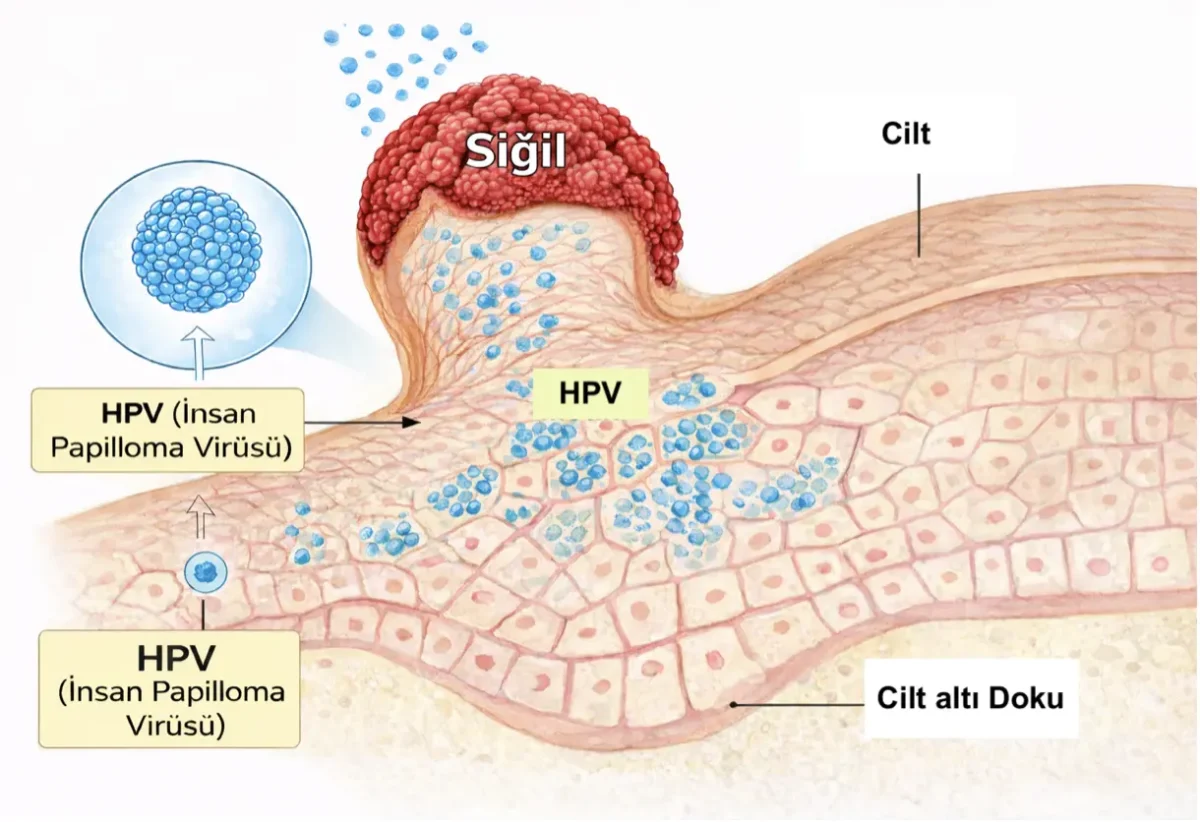
21 September 2026HPV (Human Papilloma Virus) is one of the most common sexually transmitted infections in both women and men. The virus can be transmitted between partners through close skin-to-skin and sexual contact.
While some types of HPV cause genital warts, some types defined as high-risk may be associated with the development of various cancers over the years.
The primary aim of the HPV vaccine is not to treat an existing HPV infection, but to prevent the development of new HPV infections. In this way, it contributes to the prevention of HPV-related genital warts and certain cancers.
What Diseases Can HPV Cause in Men?
HPV is not an infection that concerns only women. It can also cause important health problems in men.
HPV may be associated with penile cancer, anal cancer, and cancers of the mouth and throat in men. In addition, one of the most common consequences of HPV infection in men is genital warts.
Genital warts and HPV infection can be transmitted to partners. Therefore, protection against HPV is important not only for individual health, but also for partner health and public health.

Don't Delay, Let's Talk
Contact us for more information or to schedule an appointment.
Feneryolu Bağdat Avenue No: 85/1, 34724 Kadıköy / Istanbul – Turkey
Which Virus Types Does the HPV Vaccine Protect Against?
There are many different types of HPV, and HPV vaccines have been developed to provide protection against specific HPV types.
The bivalent HPV vaccine provides protection particularly against HPV types 16 and 18, which are important in terms of cancer development.
The quadrivalent HPV vaccine covers HPV types 6 and 11, which are responsible for the majority of genital warts, in addition to HPV 16 and 18.
The 9-valent HPV vaccine provides protection against a total of nine HPV types: HPV 6, 11, 16, and 18, as well as 31, 33, 45, 52, and 58.
Should Men Also Receive the HPV Vaccine?
Yes. The HPV vaccine is also important for men.
Vaccination in men contributes to protection against genital warts as well as HPV-related penile, anal, and mouth and throat cancers.
Vaccinating men is also important in terms of reducing the circulation of HPV in the community and the likelihood of transmission to partners.
At What Age Should the HPV Vaccine Be Given?
The greatest benefit from the HPV vaccine is obtained when a person is vaccinated before being exposed to HPV. Therefore, administering the vaccine before sexual activity begins is the ideal approach.
Vaccination can begin from the age of 9. Routine vaccination is administered during childhood and early adolescence.
Vaccination is recommended up to the age of 26 for individuals who have not previously been adequately vaccinated.
For individuals between the ages of 27 and 45, vaccination is not routinely recommended for everyone; a decision can be made together with a physician by evaluating whether the individual has previously been vaccinated, the risk of acquiring a new HPV infection, and the potential benefit.

How Many Doses of the HPV Vaccine Are Given?
The number of vaccine doses administered varies according to the age at which vaccination is started and the individual's immune status.
In general:
- 2 doses are administered to individuals who begin vaccination before the age of 15,
- 3 doses are administered to individuals who begin vaccination at the age of 15 or later.
- The two-dose schedule is generally administered at 0 and 6–12 months, while the three-dose schedule is administered at 0, 1–2, and 6 months.
The vaccination schedule should be evaluated separately in immunocompromised individuals.
Can the HPV Vaccine Be Given After Sexual Activity Has Begun?
Yes.
Although the highest level of protection from the HPV vaccine is achieved before exposure to the virus, having already begun sexual activity does not mean that a person will receive no benefit from the vaccine.
Having previously been exposed to one type of HPV does not mean that a person has also been exposed to the other HPV types covered by the vaccine. Therefore, vaccination may still be considered in individuals within the appropriate age group.
An important point should be emphasized here:
The HPV vaccine does not treat an existing HPV infection or existing genital warts. The primary aim of the vaccine is protection against new HPV infections.
Is the HPV Vaccine Safe?
HPV vaccines have been administered worldwide for many years, and their safety has been monitored in large populations.
The World Health Organization and other international health authorities evaluate the safety data of HPV vaccines and consider vaccination an important preventive health practice in the prevention of HPV-related diseases.
The choice of vaccine and vaccination schedule should be determined according to the individual's age, previous vaccination status, and individual health characteristics.
Why Is the HPV Vaccine Important?
The HPV vaccine is not a vaccine administered only to protect against genital warts. It is an important preventive health practice that also contributes to the prevention of certain HPV-related cancers.
Moreover, vaccination does not aim only to protect the vaccinated individual. By contributing to reducing the circulation of HPV in the community, it also helps protect partners and the community.