
What Is Low Sexual Desire?
24 February 2026
Active Surveillance in Prostate Cancer
2 April 2026HPV Treatment in İstanbul Kadıköy
Searches for ‘HPV treatment in Istanbul’s Asian side’, ‘HPV treatment in Kadıköy’ and ‘HPV treatment in Istanbul’ have increased significantly in recent years. This is due to the widespread prevalence of HPV infections in the community and, in particular, a better understanding of the link between genital warts and the risk of cancer. In this article, you will find scientific and comprehensive answers to all the most frequently asked questions, such as: what is HPV, what are the symptoms of HPV, how is HPV transmitted, does HPV go away, is HPV dangerous, what is AHCC, what is LEEP, and how is HPV treatment planned in the Kadıköy area.
What is HPV?
HPV stands for Human Papillomavirus. It is a group of viruses that infect the skin and mucous membranes, and is most commonly transmitted through sexual contact. To date, over 200 types of HPV have been identified. Approximately 40 of these types infect the genital area. The human papillomavirus (HPV) is the most common sexually transmitted infection worldwide. In men, HPV causes cancer of the penis, oropharynx and anus; in women, it causes cancer of the cervix, vagina, anus and oropharynx. HPV frequently causes non-cancerous external genital lesions known as condylomata acuminata, commonly referred to as condyloma or genital warts. Genital warts are a common consequence of HPV infection.
The condition known as HPV disease is actually an HPV infection. The virus settles in skin cells and multiplies in epithelial tissue. In some people, the virus can become persistent and lead to cellular changes.
HPV infections are one of the most common sexually transmitted infections worldwide. A large proportion of sexually active individuals will encounter HPV at some point in their lives.
What Are the Types of HPV?
HPV types are clinically classified into two main groups:
1-low-risk types
2-high-risk types.
High-risk HPV types, on the other hand, are associated with the development of cancer. In particular, HPV 16 and HPV 18 are responsible for the majority of cervical cancers. They are also linked to penile cancer, anal cancer, vaginal cancer and oropharyngeal cancer.
The HPV type is identified using an HPV DNA test, and determining the HPV type prior to treatment is crucial for planning follow-up care.
What are the symptoms of HPV?
Common HPV symptoms include:
- Small, raised lesions in the genital area
- Cauliflower-like warts
- Itching
- Light bleeding
- Discomfort during sexual intercourse
- Cellular changes in the smear test in women
Symptoms associated with HPV are often not noticeable. The virus can remain in the body without causing any symptoms. However, certain symptoms may appear, particularly when the immune system is weakened.
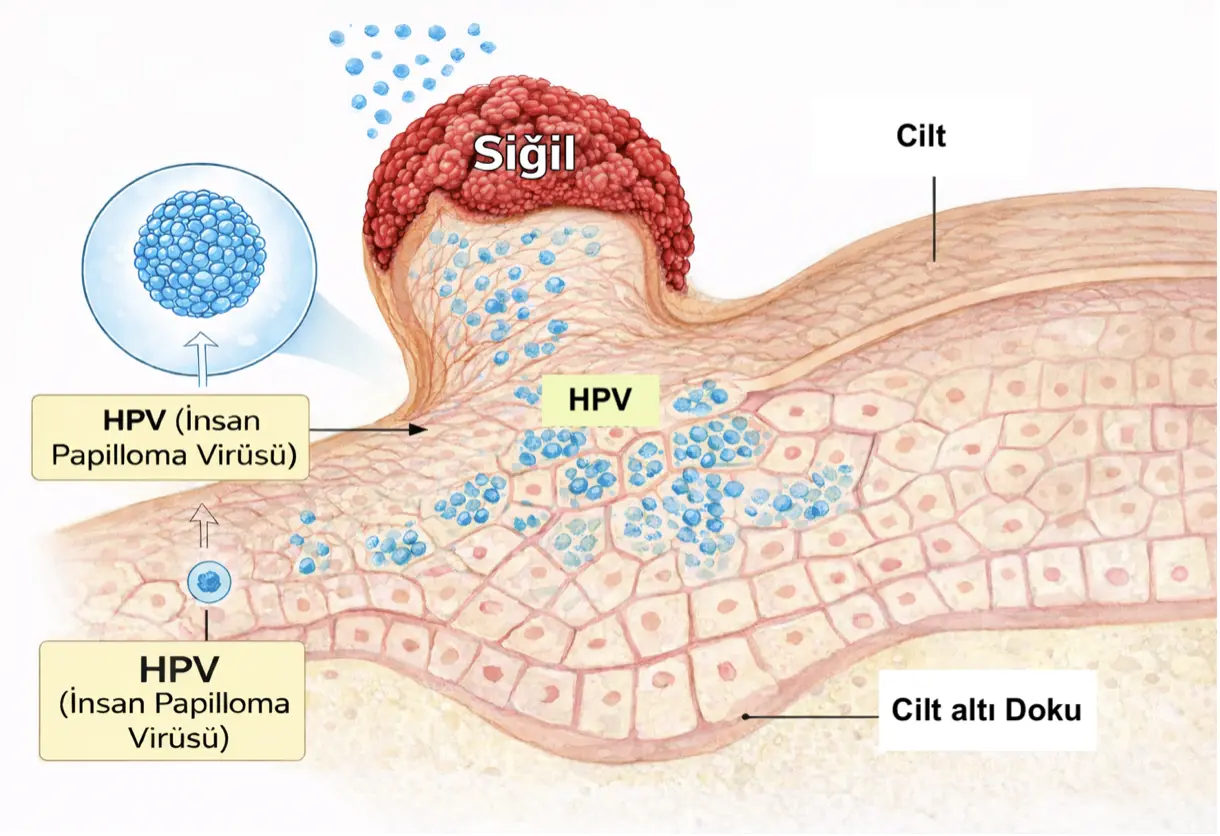

HPV Symptoms in Men
In men, HPV usually presents symptoms when warts develop. These may appear as small, raised lesions on the surface of the penis, scrotum or around the anus, often accompanied by slight changes in shape and colour. Following oral contact during sexual intercourse, lesions may also appear inside the mouth.
“Does HPV kill men?” is a frequently asked and commonly searched question. HPV is not directly fatal. However, high-risk types can lead to the development of cancer over many years. For this reason, prompt assessment is crucial if lesions are observed.
Symptoms of HPV in Women
HPV infection in women is often detected during a smear test. Cellular changes may occur in the cervix. In advanced cases, post-coital bleeding may occur. Genital warts may also develop around the vagina and vulva.
Is every wart caused by HPV?
The majority of warts found in the genital area are caused by HPV. Genital warts caused by HPV can be distinguished from other lesions by their raised, cauliflower-like surface and their darker appearance compared to normal skin. Furthermore, pain and itching are less common in HPV-related warts. Warts appearing in different parts of the body may be caused by different types of HPV and their appearance is usually distinct from that of genital warts. Vücudun farklı bölgelerinde görülen siğiller farklı HPV tiplerinden kaynaklanabilir ve görünümleri genital siğillerden çoğunlukla farklıdır.
How is HPV transmitted?
‘How is HPV transmitted?’ is one of the most frequently searched topics. HPV is most commonly transmitted through sexual contact. Transmission can occur during vaginal, anal and oral sex. Transmission is also possible through skin-to-skin contact alone, without full penetration.
Condoms reduce the risk of transmission but do not eliminate it entirely. This is because the virus can still be transmitted through areas of skin not covered by the condom.
In rare cases, transmission from mother to baby can also occur during childbirth.
What Are the Factors That Increase the Risk of HPV Infection?
Certain factors can make it easier for an HPV infection to become persistent:
Having multiple sexual partners, a weakened immune system, smoking, prolonged stress and engaging in sexual activity at a young age are among these risk factors.
Smoking is a major risk factor that paves the way for HPV to become persistent by suppressing the immune response, particularly in cervical cells.
Is HPV Dangerous?
The answer to the question ‘Is HPV dangerous?’ depends on the type. Whilst some HPV types can clear up on their own without causing infection, some types only cause warts, whilst certain high-risk types can lead to the development of cancer in the cervix, vagina, mouth, throat, anus and penis over the long term. HPV infection is detected in the vast majority of cervical cancer cases in women. In men, it is also associated with penile and anal cancer.

HPV Treatment Price in Kadıköy, Istanbul
HPV treatment cost in Istanbul may vary depending on the treatment method applied, the techniques used, and the conditions under which the procedure is performed. As the treatment plan is personalized, exact pricing can only be determined after a medical evaluation.
belirlenebilmektedir.
Please do not hesitate to reach out to us with any questions
HPV Treatment Kadıköy Address:Feneryolu Bağdat Caddesi
No 85/1 Posta Kodu: 34724 Kadıköy/İstanbul - Türkiye
HPV-Related Diseases
HPV does not only cause genital warts. It is also associated with the following diseases:
- Cervical cancer
- Penile cancer
- Anal cancer
- Vaginal cancer
- Vulvar cancer
- Oral and pharyngeal cancer
All of these HPV-related conditions are highly dangerous, and regular screening and early diagnosis are of great importance in this regard.
How is HPV Diagnosed?
In women, HPV is diagnosed using a Pap smear and an HPV DNA test. The smear test detects cellular changes. The HPV DNA test, on the other hand, identifies the type of virus.
In suspicious cases, colposcopy and biopsy may also be performed.
An HPV DNA test is carried out using a swab sample taken from the lesion, which can also be found in men. The virus can also be isolated from the tissue by direct excision (removal) of the lesion, and typing is performed at the same time. Furthermore, a pathological examination is carried out on the excised tissue to determine whether it has caused cellular changes, and to assess whether it presents a malignant appearance, such as cancer.
Does HPV Go Away?
Many patients who have been exposed to HPV or diagnosed with HPV wonder whether they will be able to recover completely from this condition. This is why the question ‘Does HPV go away?’ is frequently asked. Warts caused by HPV can be completely eliminated with appropriate treatment and follow-up protocols.
However, there is no specific medication that completely eradicates the virus. Treatment is directed at the lesions that have formed.
With appropriate follow-up and treatment protocols, recurrences can also be prevented.
Don't delay, let's meet now !
- Feneryolu Bagdat Avenue No 85/1 Postal Code: 34724 Kadıköy/İstanbul - Turkey
How is HPV treated?
HPV treatment should be planned according to the specific problem caused by HPV.
For genital warts, laser treatment, cryotherapy (freezing), electrocautery (burning) or surgical excision + cauterisation may be used.
The treatment method is determined based on the size and extent of the lesion.
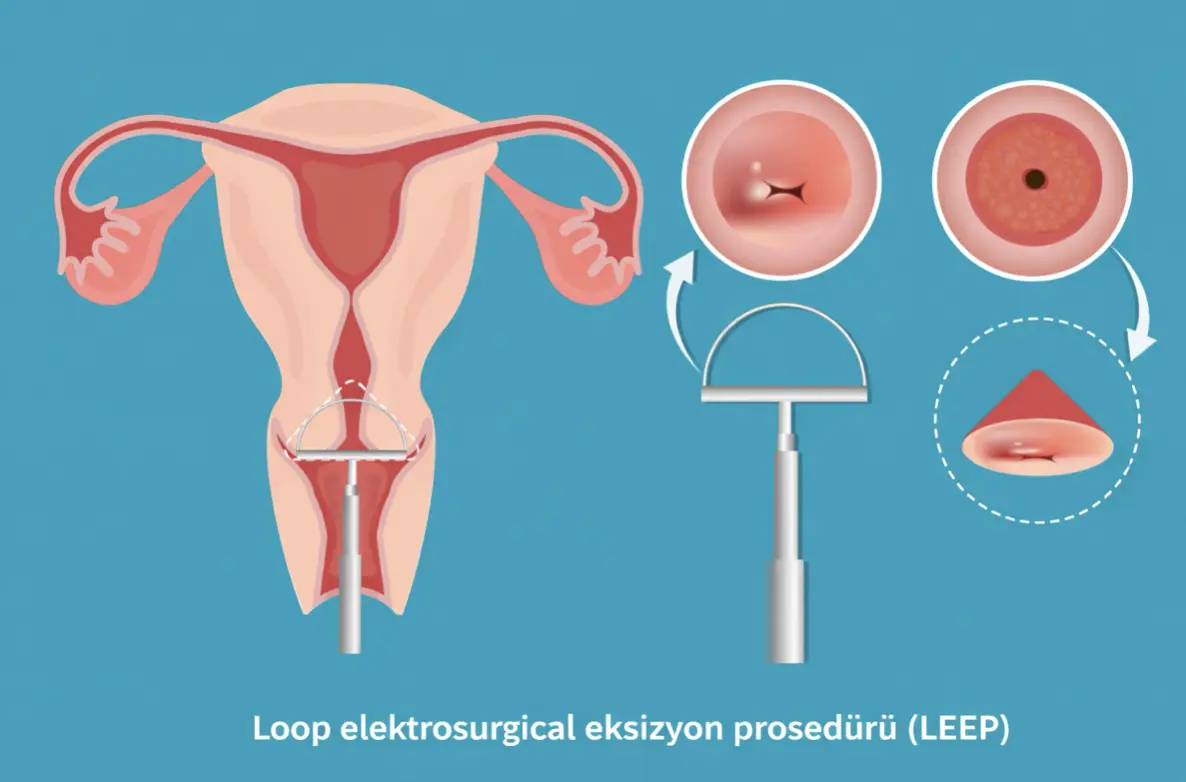
In women, LEEP may be performed for cellular changes in the cervix. LEEP (Loop Electrosurgical Excision Procedure) is a procedure to remove abnormal cells from the cervix.
Some patients come across the term ‘AHCC’ whilst searching online for answers to the question, ‘Can HPV-related warts be treated with medication?’ In particular, those searching for terms such as ‘clearing HPV naturally’, ‘boosting immunity against HPV’ and ‘supplements for HPV’ come across various pieces of content about AHCC.
**AHCC stands for “Active Hexose Correlated Compound”**. AHCC is an extract derived primarily from certain mushroom species, such as Lentinula edodes (shiitake mushroom), and is used as a supplement to support the immune system. It contains alpha-glucans, and it is thought that these components have a stimulating effect on immune cells (particularly natural killer cells and T lymphocytes).
The reason AHCC has come to the fore in the context of HPV is that findings from some small-scale clinical trials suggest it may contribute to the clearance of high-risk HPV infections. However, there is an important point to note here:
AHCC is not an approved standard treatment for HPV. It is not an antiviral drug that directly eradicates the virus and is not considered a ‘HPV treatment’ in its own right. Furthermore, it does not replace local treatments such as laser therapy, cryotherapy or surgery for the removal of genital warts.
As some patients are seeking an oral medication for HPV-related warts, they may view AHCC as a drug that directly treats the warts. However, the treatment of genital warts is carried out through local interventions. Supplements such as AHCC can at best be considered as supportive products that boost the immune system and must always be used under medical supervision.
In conclusion, whilst AHCC may be discussed as an immune-supporting supplement, the fundamental approach to managing HPV infections involves regular monitoring, interventional treatment where necessary, and preventive vaccination.
In men
In women
The HPV Treatment Process
As part of the HPV treatment process, following the appointments booked by our patients—particularly those living in the areas near our clinic on the Asian side of Istanbul and in the Kadıköy district—all arrangements are finalised on the day of their appointment.
The treatment plan we follow at our clinic for HPV infections generally proceeds as follows:
Firstly, our patients undergo a detailed examination. The lesions are assessed. If necessary, a sample is taken for an HPV DNA test. The appropriate treatment method is determined. A follow-up plan is drawn up. If our patients have not been vaccinated, they are included in the vaccination programme.
Methods of Protection Against HPV
The most effective method of protection against HPV is vaccination. In addition, the use of condoms, monogamy and regular check-ups are also very important. Minimising environmental and dietary factors that weaken the immune system, and in particular giving up smoking, are crucial in this regard.
What is the HPV Vaccine?
The HPV vaccine provides protection against high-risk HPV types. The most commonly used form today is the 9-valent vaccine. It can be administered to people aged 9–45. It does not treat an existing infection but can prevent new infections.