ThuLEP Surgery – What is ThuLEP?
23 July 2025
Stem Cell-Based Treatment for Erectile Dysfunction
2 September 2025All surgical methods described under this heading are surgical procedures performed exclusively for benign prostate enlargement. Prostate cancer surgeries are significantly different and are presented separately under the subheading "Prostate Cancer Surgery."
WHAT IS PROSTATE SURGERY?
If your prostate-related urinary symptoms do not respond to other treatment methods such as medication, or if your symptoms worsen and affect your daily life, prostate surgery may be necessary. Your doctor will help you decide whether surgery is appropriate for you and explain the available options.
WHY IS PROSTATE SURGERY PERFORMED?
When considering surgery, keep the following in mind:
- How much your symptoms are affecting your life,
- How well you tolerate your current medications,
- Whether an enlarged prostate causes kidney problems, infections, recurrent blood in the urine, or incomplete emptying of the bladder,
- What surgical options are available at your hospital,
- Your personal preferences.
There are different surgical methods available for an enlarged prostate. The goal of these surgeries is to reduce symptoms and improve urine flow. Surgery is quite effective in most men; however, some side effects may occur. Therefore, it is important to discuss all possible effects with your doctor before deciding on prostate surgery.
What are the risks of prostate surgery?
It is important to discuss with your doctor the possible side effects associated with any treatment recommended for an enlarged prostate. You will likely have several different treatment options, and your doctor will be happy to explain the benefits, risks, and possible side effects of each. Being informed will help you and your healthcare team make the best decision for you.
Some common short-term side effects of surgery for prostate enlargement include:
- Infection
- Risk of bleeding
- Difficulty urinating
- Temporary pain or discomfort during urination
These side effects often go away within the first few weeks after surgery. However, if you have concerns or if symptoms persist longer than expected, you should contact your doctor.
Possible long-term side effects of prostate surgery include:
- Narrowing of the urethra: This is rare. If it occurs, the narrowing must be opened endoscopically. In cases of recurrent narrowing, open surgery is required.
- Retrograde ejaculation: This is when semen flows backward into the bladder instead of out of the penis. It is very common after prostate enlargement surgery. In this case, semen does not come out of the penis but flows directly into the bladder during ejaculation. This condition is not harmful, as semen is expelled with urine; however, it may cause fertility issues.
- Urinary incontinence: This is rare. In such cases, pelvic floor exercises to strengthen the muscles that control urination may be recommended, and medication may be added if necessary.
Erectile dysfunction: This is very rare. If this occurs, it can usually be treated with medication.
HOW IS PROSTATE SURGERY PERFORMED?
Open Prostate Surgery:
- Open Prostatectomy
In open prostatectomy surgery, the enlarged portion of the prostate is removed through an incision made below the navel into the abdomen. The procedure is performed to address benign prostatic hyperplasia (BPH). Information about when it is preferred and the recovery process is provided below:
When is an Open Prostatectomy Performed?
- It may be preferred in patients with an enlarged prostate (80 grams or more).
- This method is generally used when other treatments are insufficient or when minimally invasive surgeries are not appropriate.
- Here, too, after the surgery is complete, a catheter is inserted into the urethra and into the bladder. The catheter allows urine in the bladder to drain directly into the urine bag.
- The catheter flushes the bladder and urinary tract, preventing blood clots from forming.
- This is a major and traditional surgical procedure; the recovery process may be longer compared to other methods.
- The duration of catheterization and hospital stay is longer compared to other minimally invasive methods.
Surgical Procedure
- An incision is made below the navel, and the enlarged part of the prostate is removed.
It is performed under general anesthesia (where the patient is put to sleep) or spinal anesthesia (where the lower body is numbed).
Closed Prostate Surgery
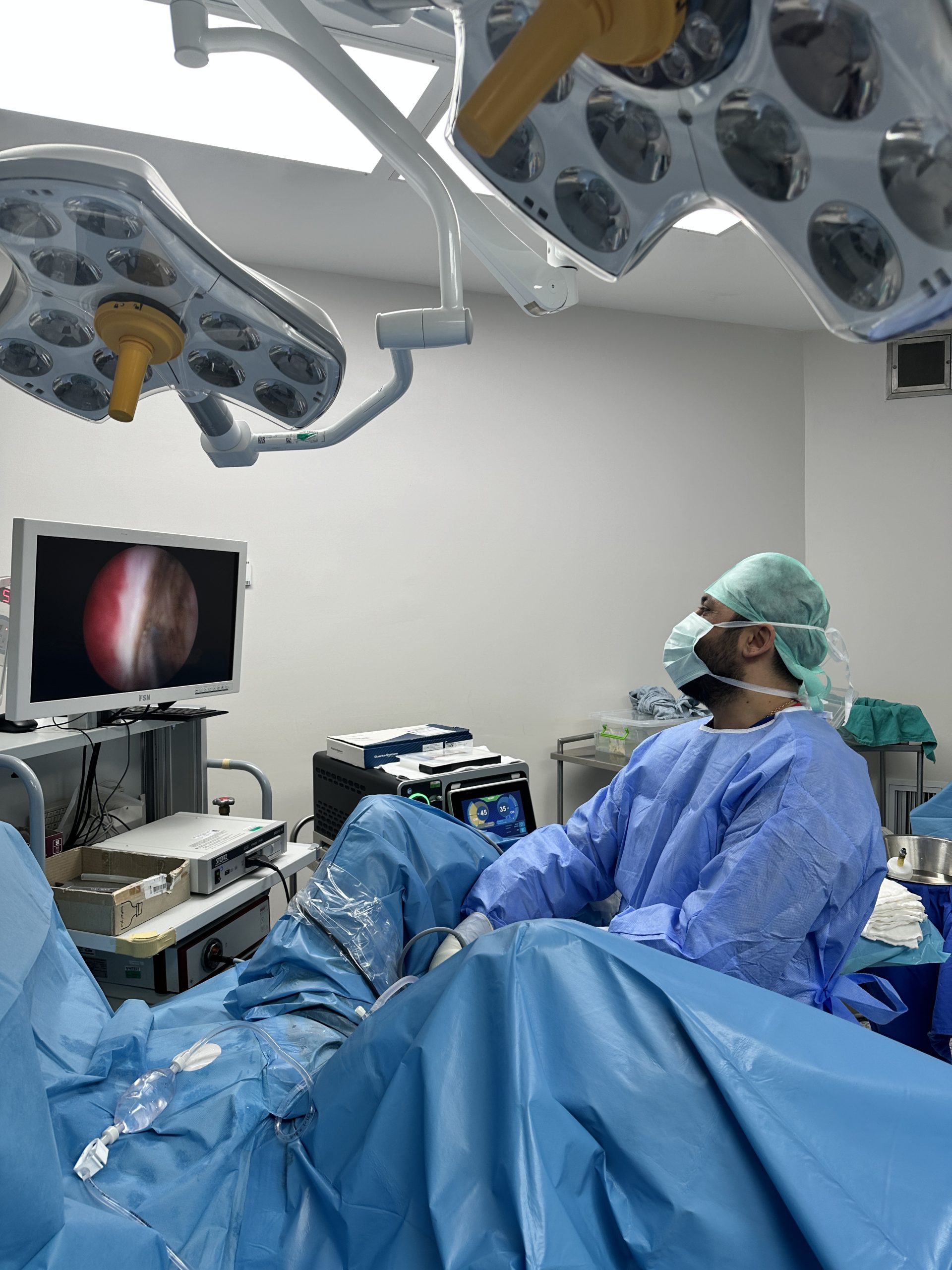
These are surgeries for prostate enlargement performed by inserting thin endoscopic imaging devices into the urinary canal through the urinary outlet at the tip of the penis.
- Transurethral Resection (TURP)
TURP is a common surgical procedure for benign prostatic hyperplasia (BPH) that involves removing part of the prostate to relieve symptoms. Here's what you need to know about how it's performed and the recovery process:
How Is the Surgery Performed?
- During TURP, a device called a resectoscope is inserted into the urethra, the tube through which urine is expelled.
- The resectoscope has a camera and a small wire loop at the end that uses an electric current to cut and remove prostate tissue, thereby clearing the blockage.
- During the procedure, general anesthesia (you are put to sleep) or spinal anesthesia (the area below your waist is numbed, and you remain awake) is administered.
Urinary catheter
- At the end of the surgery, a catheter is inserted into the urethra and into the bladder. The catheter allows urine from the bladder to drain directly into a urine bag.
- The catheter also flushes the bladder and urinary tract, preventing blood clots from forming.
- One or two days after the surgery, once the catheter is removed and you are able to urinate on your own, you are ready to be discharged.
Recovery Process
- It is recommended to avoid sexual activity for 2-3 weeks.
- After this period, a condition called "retrograde ejaculation" (backward ejaculation) may occur during sexual intercourse. In this case, semen does not exit the penis but instead flows directly into the bladder.
- This is not harmful, as the semen is expelled with urine; however, it may cause fertility issues.
- Transurethral Incision (TUIP)
How is TUIP performed?
- It is usually preferred in men with small prostates.
- Unlike TURP, prostate tissue is not removed.
- Instead, the surgeon makes a small incision in the area near the bladder neck and the urethra. These incisions help widen the urinary tract and allow urine to flow more easily.
- The procedure is performed using a thin device (resectoscope) inserted through the urethra.
- It is performed under general or spinal anesthesia; no pain is felt during the procedure.
- A catheter is also placed in the urethra leading to the bladder at the end of the procedure. The catheter allows urine from the bladder to drain directly into a urine bag.
Who is it suitable for?
- It is suitable for patients with a small prostate (40 grams or less) and those whose symptoms significantly impair their quality of life.
- It may be preferred in patients seeking a less invasive option and those without significant surgical risks.
- Laser Vaporization of the Prostate (Vaporization) - Greenlight
Laser vaporization is a method used to treat benign prostatic hyperplasia (BPH). The enlarged part of the prostate is vaporized using laser energy and removed, thereby relieving urinary flow. Here is what you need to know about this procedure:
How is Laser Vaporization Performed?
- A thin device called a resectoscope is gently inserted into the urethra (urinary canal).
- The laser at the tip applies heat energy to destroy the prostate tissue, thereby eliminating the blockage.
- The surgeon can safely guide the procedure by clearly viewing it on a screen via the camera on the resectoscope.
- General anesthesia (where you are put to sleep) or spinal anesthesia (where the lower body is numbed) is administered during the procedure.
Urinary catheter
- At the end of the surgery, a catheter is inserted into the urethra and into the bladder. The catheter allows urine from the bladder to drain directly into a urine bag.
- The catheter also flushes the bladder and urinary tract to prevent blood clots from forming.
- One or two days after surgery, once the catheter is removed and you are able to urinate on your own, you are ready to be discharged.
Effect on Sexual Activity
- It is recommended to avoid sexual intercourse for 2–3 weeks after the procedure.
- When you resume sexual activity, you may experience retrograde ejaculation (ejaculation backward into the bladder).
- Laser Enucleation of the Prostate (HoLEP) (ThuFLEP)
Laser enucleation is a method used to treat benign prostatic hyperplasia (BPH), in which the part of the prostate causing obstruction is removed using a laser. Here is what you need to know about this procedure:
When is Laser Enucleation Performed?
- It is more commonly preferred in patients with enlarged prostates.
- Laser enucleation offers a less invasive alternative to traditional open surgery.
The Surgical Process
- A thin device called a resectoscope is inserted through the urethra. This device has a laser and a camera at its tip.
- The laser cuts and removes excess prostate tissue.
- The removed tissue is separated into small pieces and extracted through the same device.
- General anesthesia (where you are put to sleep) or spinal anesthesia (where the lower body is numbed) is administered during the procedure.
- At the end of the surgery, a catheter is inserted into the urethra and into the bladder. The catheter allows urine from the bladder to drain directly into a urine bag.
- The catheter also flushes the bladder and urinary tract, preventing blood clots from forming.
- One or two days after the surgery, once the catheter is removed and you are able to urinate on your own, you are ready to be discharged.
Effect on Sexual Activity
- It is recommended to avoid sexual intercourse for 2–3 weeks after the procedure.
- When you resume sexual activity, you may experience retrograde ejaculation (ejaculation backward).
- New Surgical Treatments for BPH
Water Jet Ablation (Aquablation)
- A thin instrument is inserted through the urethra, and high-pressure water is directed at the prostate tissue.
- Excess tissue is removed by cutting with water.
- It is generally associated with fewer side effects.
- However, not all surgeons are trained in this technique.
Rezum System (Convective Water Vapor Energy (WAVE) Ablation)
- A small device is inserted through the urethra to deliver sterile water vapor to specific areas of the prostate.
- The steam causes the tissues to heat up and die; these cells are then gradually removed by the body.
- The prostate shrinks, and the urinary tract opens.
- It offers advantages in terms of preserving sexual function.