Cryoablation (Nerve Freezing) Treatment for Premature Ejaculation
23 October 2025
Urinary Incontinence
20 November 2025What is Selective Dorsal Neurectomy?
Selective Dorsal Neurectomy (SDN) is a modern microsurgical technique used to treat premature ejaculation in men.
In this procedure, part of the dorsal nerve branches responsible for excessive sensitivity in the glans penis are selectively cut, thereby restoring control over the ejaculation reflex.
The aim is to prolong the duration of sexual intercourse, increase the sense of control, and improve the quality of sexual life for couples.
Scientific research has shown that premature ejaculation, especially in its lifelong (primary) form, is closely related to penile hypersensitivity (excessive nerve sensitivity at the head of the penis).
Selective Dorsal Neurectomy can permanently reduce this sensitivity, extending the ejaculation time by 3 to 6 times.
Premature Ejaculation and Other Treatment Options
Premature ejaculation is one of the most common sexual dysfunctions in men, affecting approximately 30–40 per cent of men in society.
Treatment options are tailored to the individual and typically include the following methods:
- Behavioural therapy (stop-start or squeeze technique)
- Application of anaesthetic sprays or creams (containing lidocaine/prilocaine)
- Medication (serotonin reuptake inhibitors: e.g., dapoxetine)
- Penile head filler (hyaluronic acid injection)
- Nerve freezing (cryoablation)
Most of these treatments offer temporary solutions. Selective dorsal neurectomy is an effective surgical option for patients seeking permanent results who have not responded positively to the aforementioned treatments.


Who is it suitable for?
Selective dorsal neurotomy is not performed on every patient with premature ejaculation. The best results are achieved with the right patient selection.
This surgery is particularly recommended for the following groups:
- Men with a lifelong (primary) diagnosis of premature ejaculation,
- Cases where no response is obtained to medication, spray, or behavioural therapy,
- Patients with penile hypersensitivity (excessive sensitivity),
- Men with normal erectile function but poor ejaculation control,
- Patients who do not wish to use medication continuously and are seeking a permanent solution.
In cases of secondary (acquired) premature ejaculation, the underlying cause (prostatitis, thyroid disorder, stress, etc.) should be treated first; SDN should be considered only after other causes have been ruled out.
How is the Surgery Performed?
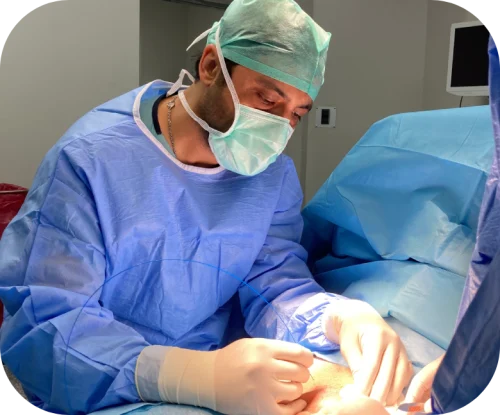
The procedure is usually performed under local anaesthesia, with light sedation or spinal anaesthesia if required, depending on the patient's preference and the centre's conditions.
It is a short and safe procedure, lasting approximately 30–45 minutes.
Stages of the procedure:
- Preparation: After cleaning and sterilising the penis area, a local anaesthetic is injected.
- Incision: A small circular incision is made approximately 1 cm behind the border between the head and shaft of the penis.
- Exposure of nerves (dissection): The dorsal nerve branches are carefully located under a microscope. Thick and excessive branches are selectively cut, leaving some branches in each area to preserve sensation.
- Closure: The skin and tissue are closed with absorbable sutures.
- Recovery: The patient is usually discharged on the same day and can return to their daily routine within 2–3 days. It is generally recommended to wait 3–4 weeks before engaging in sexual intercourse.
What are the results of Selective Dorsal Neurectomy (SDN)?
Selective Dorsal Neurectomy (SDN) is one of the surgical methods that has come to the fore in recent years for the treatment of premature ejaculation. This procedure is based on selectively cutting some of the nerve branches that cause excessive sensitivity in the penis. The aim is to prolong the ejaculation time and increase the patient's control by reducing sensitivity.
In a randomised controlled trial conducted in China (Liu et al., 2019), the average ejaculation time in men who underwent SDN increased from 49 seconds to 257 seconds. This represents an increase of approximately five times. This increase was found to be significant not only in terms of duration but also in terms of quality of life.
Similar results have been reported in various clinical studies conducted in Korea and Turkey, in addition to the study by Liu et al.
An important point in the research is that no permanent loss of sensation, erectile dysfunction, or loss of orgasm was reported. This is possible because the method only intervenes with the small branches of the nerves that cause excessive sensitivity, rather than the nerves themselves.
Other Treatment Methods for Premature Ejaculation


Patient Satisfaction and Success Rates
- Significant increase in ejaculation control,
- An increase in partner satisfaction,
- An increase in self-confidence in daily life has been observed.
Mild numbness or tingling may occur in the early postoperative period; these symptoms usually disappear within a few weeks. In the long term, natural sensation is preserved as nerve regeneration is completed.
Advantages of Selective Dorsal Neurectomy
- Provides permanent or long-term results.
- It has high success rates with a single session of microsurgery (80–90%).
- Erectile function is preserved, and the sensation of orgasm continues.
- Partner satisfaction significantly increases after the procedure.
- It can be completed in a short time under local anaesthesia.
- It does not require repetition compared to other temporary treatment methods.
How much does Selective Dorsal Neurectomy cost?
The cost of Selective Dorsal Neurectomy surgery varies depending on the centre's equipment, the surgeon's experience, the technologies used (e.g. nerve monitoring system) and the operating theatre conditions.
Following an examination and nerve sensitivity test, the most suitable method for the patient can be determined.
If you have any questions, do not hesitate to contact us: